
Donald Trump‘s cankle crisis is back as the president showed off his heavily swollen ankles outside the White House, RadarOnline.com can report.
In recent weeks, the 79-year-old has raised concerns about his appearance, but the POTUS has insisted he’s in perfect health.
Chaos Over Cankles
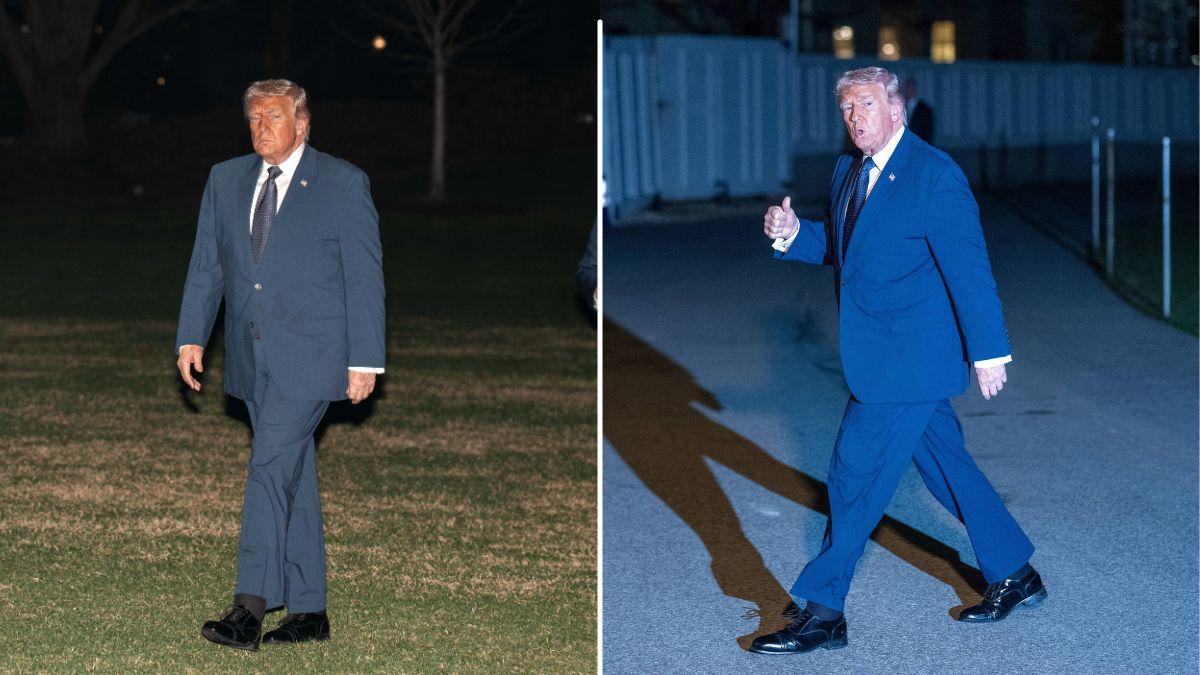
Trump was photographed striding across the White House lawn Monday night after another weekend trip to Florida.
The president was dressed in a sharp blue suit and greeted reporters waiting for him as he stepped off Marine One with a big thumbs up. But all eyes were instead on his feet – or more specifically, what critics on X called his “massively swollen ankle.”
“Yikes! That is a cankle!” one person exclaimed on X, as another agreed, “That is rather nasty looking and quite extreme.”
A third person blasted: “Oh JEEZ that is really, really bad. Dude needs to be on a strong diuretic.”
Meanwhile, a separate user mocked, “My goodness, his cankles are famous now. Look, the hands, the neck rash, the cankles, the infusion bruises, the slurred speech….He is the healthiest POTUS ever. BTW, his physician should have his license taken away for that statement.”
Trump’s Sitting Ovation
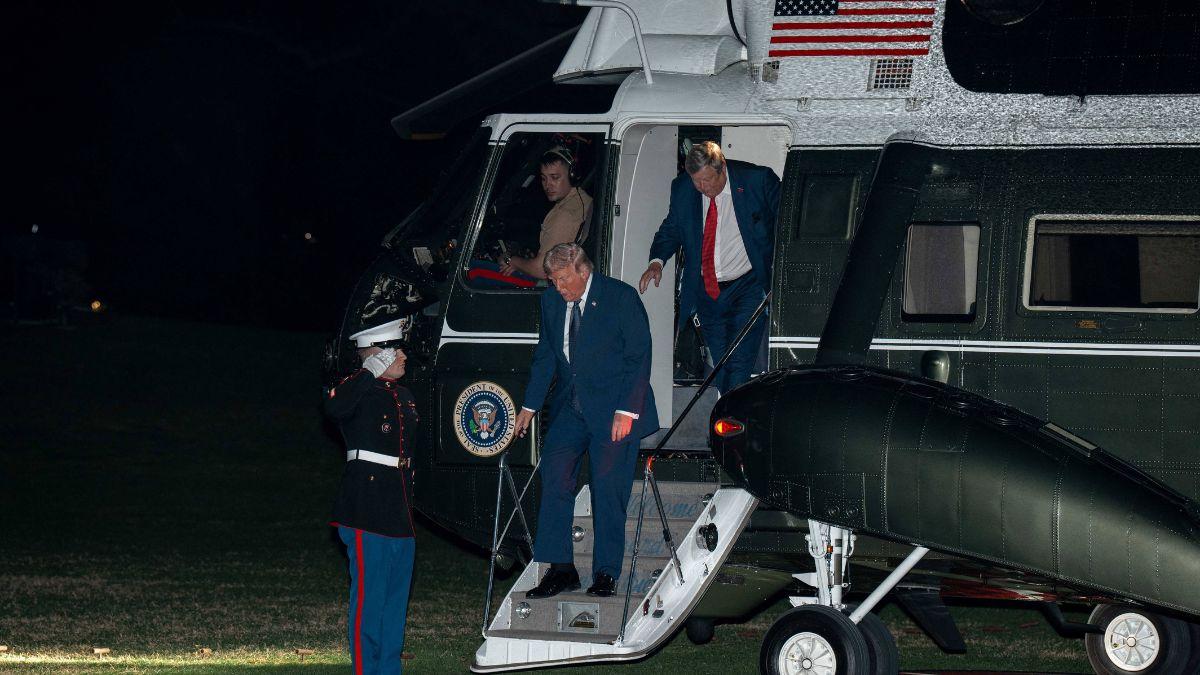
BREAKING: New images released of Trump’s massively swollen ankle. What’s going on? pic.twitter.com/My1iwtPXiU
— Brian Krassenstein (@krassenstein) March 10, 2026
As the oldest person to ever assume the presidency, Trump’s health has been under increased scrutiny during his second term.
In September, a White House source reportedly admitted Trump preferred to hold events in the Oval Office or large meeting spaces so he “doesn’t actually have to stand up for prolonged periods of time.”
During an earlier Oval Office meeting with European leaders, Trump reportedly chose to sit behind the Resolute Desk in a bid to obscure his visibly swollen ankles from the cameras.
Trump was previously diagnosed with chronic venous insufficiency, of which swollen ankles are a common symptom. While he confessed to The Wall Street Journal he had worn compression socks for a while, he said he “didn’t like them” and stopped.
When The Daily Beast‘s writer Vic Verbalaitis reached out to The White House for comment on Trump’s swollen ankles, they replied: “President Trump is the sharpest, most accessible, and energetic president in modern American history. The only thing swollen is Vic Verbalaitis’ stupidity that will prevent him from working for a legitimate news outlet.”
Trump’s Pain in the Neck
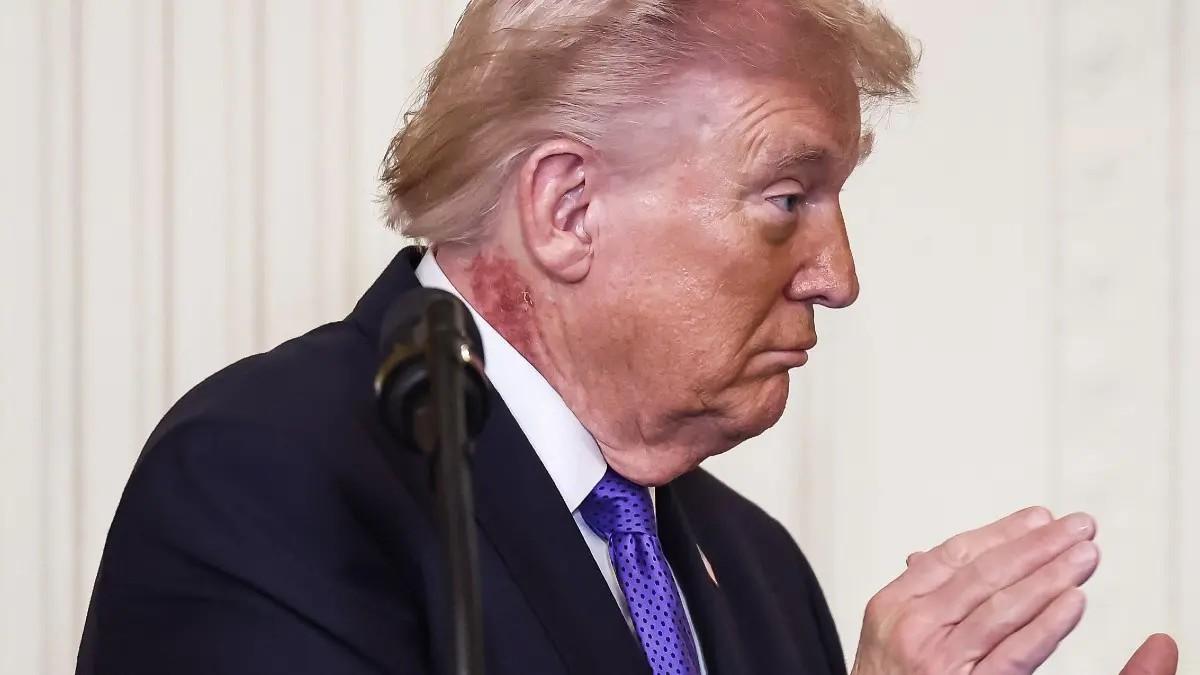
The ankle monitoring comes on the heels of concerns about the president’s neck rash. Last week, a bright red spot, which appeared irritated, was seen on the president’s skin, but the White House physician was quick to come up with an explanation.
“President Trump is using a very common cream on the right side of his neck, which is a preventative skin treatment, prescribed by the White House Doctor,” Dr. Sean Barbabella told Radar. “The President is using this treatment for one week, and the redness is expected to last for a few weeks.”
Later in the week, Trump was spotted seemingly wearing makeup to cover the rash.
Trump Feels Great
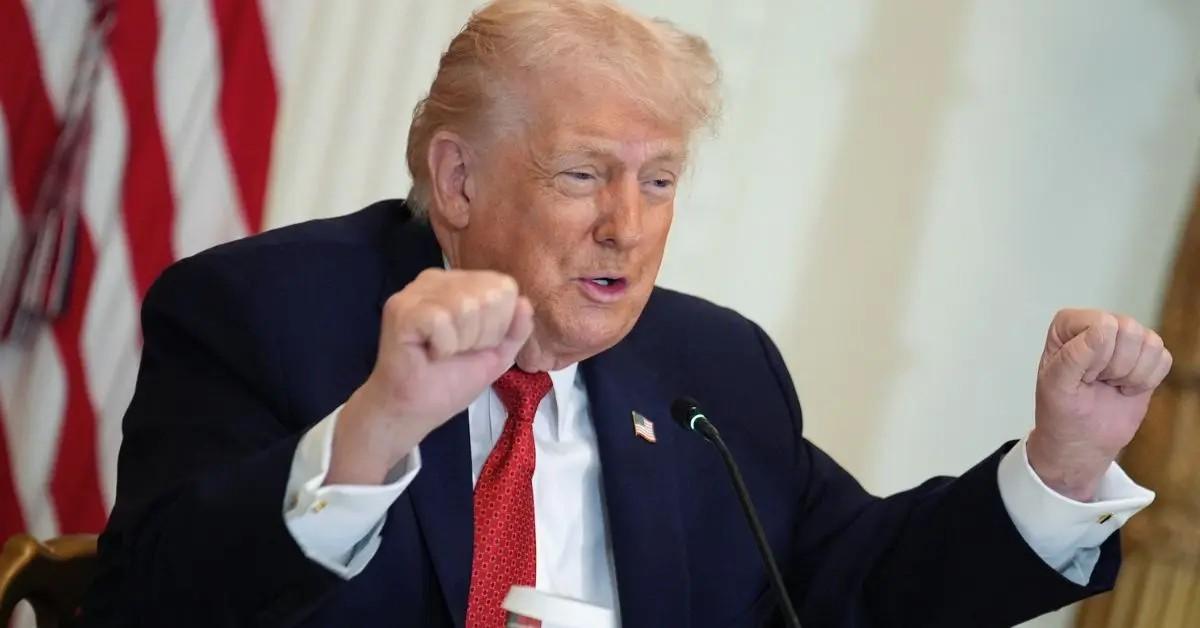
Trump’s Press Secretary, Karoline Levitt, has been forced to repeatedly defend her boss and his health. She recently revealed a summary from the President’s physician that claimed President Trump’s “cardiovascular imaging was perfectly normal.”
She added Trump’s abdominal imaging was “perfectly normal” as “all major organs” appeared “healthy and well perfused.”
“Everything evaluated is functioning within normal limits with no acute or chronic concerns,” Levitt elaborated at the time.
Trump has also pushed back on rumors his health is faltering, claiming he feels younger than his age.
“I feel like I did 50 years ago,” Trump told Tom Llamas during an interview on NBC, adding that he feels “great, physically and mentally.”

Trump administration underestimated Iran war’s impact on Strait of Hormuz

The Pentagon and National Security Council significantly underestimated Iran’s willingness to close the Strait of Hormuz in response to US military strikes while planning the ongoing operation, according to multiple sources familiar with the matter.
President Donald Trump’s national security team failed to fully account for the potential consequences of what some officials have described as a worst-case scenario now facing the administration, the sources said.
While key officials from the Departments of Energy and Treasury were present for some of the official planning meetings about the operation before it started, sources said, the agency analysis and forecasts that would be integral elements of the decision-making process in past administrations were secondary considerations.
Treasury Secretary Scott Bessent and Energy Secretary Chris Wright have been key players throughout the planning and execution stages of the conflict, the sources acknowledged. But Trump’s preference of leaning on a tight circle of close advisers in his national security decision making had the effect of sidelining interagency debate over the potential economic fallout if Iran were to respond to US-Israeli strikes by closing the strait.
And now it may be weeks before the administration’s efforts to alleviate the intensifying economic fallout take hold, officials said Thursday, including high-risk naval escorts of oil tankers through the strait that the Pentagon believes are currently too dangerous to conduct. The president, meanwhile, has continued to downplay the tumult in energy markets.
The reality in the strait has left diplomatic counterparts, former US economic and energy officials and industry executives who spoke with CNN in a state of confusion and disbelief.
“Planning around preventing this exact scenario — impossible as it has long seemed — has been a bedrock principle of US national security policy for decades,” a former US official who served in Republican and Democratic administrations said. “I’m dumbfounded.”
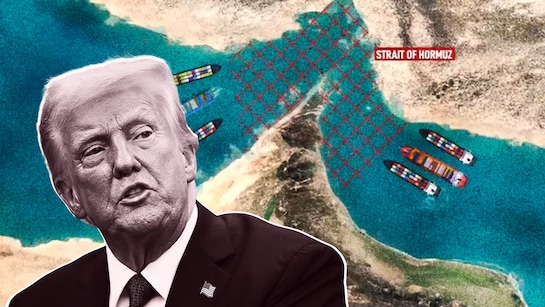
Shipping industry executives have made regular requests to the US Navy for military escorts, all of which have been rebuffed. In regular briefings for industry participants in the region, US military officials have repeatedly made clear they have not received orders to begin any escort operation and the risks to US assets remained extremely high, according to two executives with knowledge of the matter.
Bessent told Sky News’ Wilfred Frost on Thursday that those escorts would begin “as soon as it is militarily possible.”
“That was always in our planning, that there’s a chance that US Navy, or perhaps an international coalition, will be escorting oil tankers through,” he said.
But the path to this point, sources said, appears to mark the complex convergence of geopolitical assumptions, energy market forecasts and cross-cutting strategic priorities.
Top Trump officials acknowledged to lawmakers during recent classified briefings that they did not plan for the possibility of Iran closing the strait in response to strikes, according to three sources familiar with the closed-door session.
The reason, multiple sources said, was administration officials believed closing the strait would hurt Iran more than the US — a view that was bolstered by Iran’s empty threats to act in the strait after US strikes on Iranian nuclear facilities last summer.
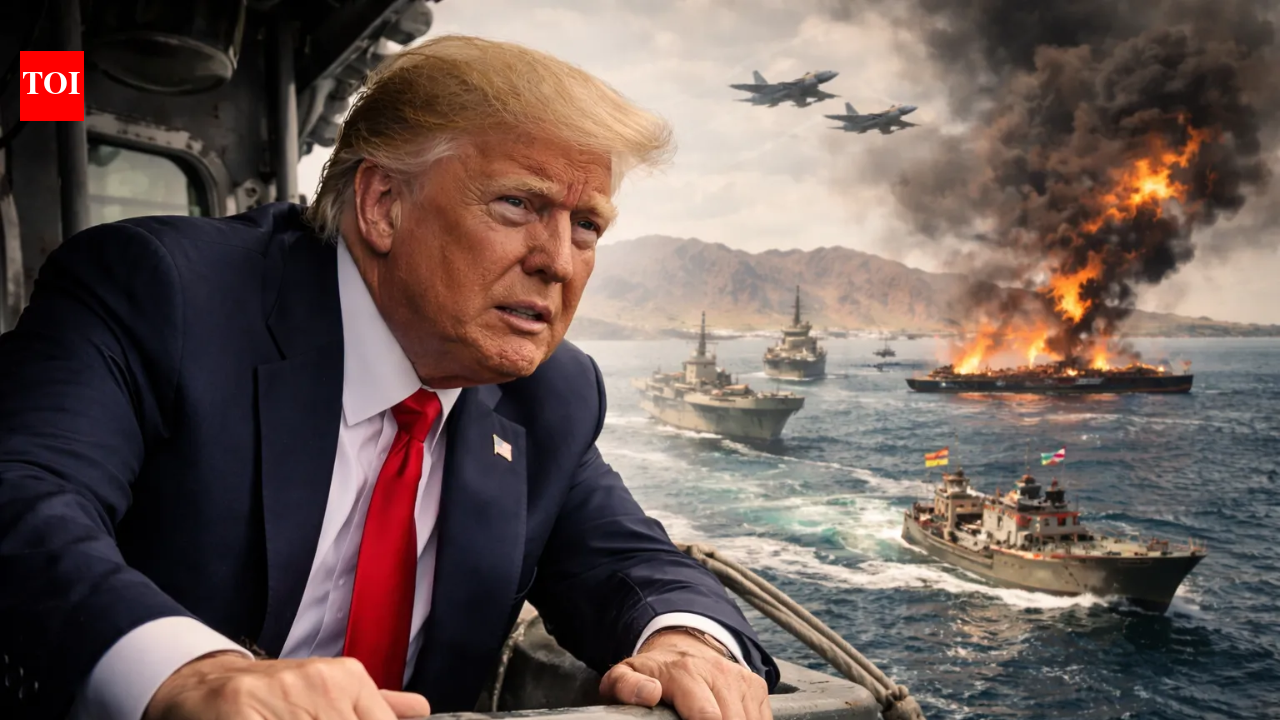
The White House touted the administration’s planning in a statement on Thursday.
“Through a detailed planning process, the entire administration is and was prepared for any potential action taken by the terrorist Iranian regime,” spokeswoman Anna Kelly said, while touting the US military’s success.
“President Trump has been clear that any disruptions to energy are temporary and will result in a massive benefit to our country and the global economy in the long-term,” she added.
CNN has reached out to the Pentagon for comment.
Multiple current and former US officials told CNN that plans for any military action against Iran would account for the possibility of Iran closing the waterway. The US military has long maintained and updated plans to address Iranian military action in the critical corridor.
But at a moment where global oil and LNG supplies were plentiful, US oil production sat at record highs and Trump officials were basking in a pliant Venezuelan government and the potential for rapid expansion of new production from a former foe, the global scale of the downside risks was not viewed as a major consideration.
Even in weighing the potential for disruption in the strait, the administration has been far more focused on its overwhelmingly positive — if still aspirational — view of how markets would respond to eliminating the threat of Iranian disruptions entirely.
“To win in life, you’ve got to suffer short-term pain for the long-term gain, and that’s what we’re in the middle of doing right now,” Wright said in a Wednesday interview on NewsNation. “I think the American people will be thrilled with a peaceful world on the other side and more secure supplies of energy for decades to come.”

The prospect of naval escorts
On Thursday, in his first public comments since being elevated, new Iranian Supreme Leader Mojtaba Khamenei said the strait would remain closed as a “tool of pressure,” according to a statement read on his behalf on Iranian state TV.
That leaves the US with few options.
Energy executives have conveyed to administration officials they want an early end to the war, according to multiple sources familiar with the discussions. For now, they are wary of putting their assets and people at risk by running tankers through the strait and do not foresee that changing until the kinetic nature of the war slows dramatically, sources said.
Military officials have been holding daily calls and briefings with energy industry representatives for the last several days, according to sources familiar.
But from nearly the start of the conflict, US officials have told energy company representatives it was not safe enough for the Navy to conduct the escorts in the war’s early days.
A US military official told CNN that Iranian drones and missiles, followed by mines, are the chief threat facing vessels trying to cross the strait. In wargaming a possible conflict with Iran in recent years, one of the biggest risks to the US military was ships being packed tightly into the waterways in the strait, Bab-el-Mandeb and Red Sea, vulnerable to attack by Iranian missiles and drones, another source said.
Nate Swanson, a former career State Department official focused on Iran, noted that there had been military escorts of oil tankers through the strait in the 1980s, but Iran’s use of drones this time around makes it a very different situation.

Military officials have also indicated to energy industry representatives they can’t spare Navy vessels anyway, since they’re already engaged in offensive operations elsewhere. As of Wednesday, there was no precise timeline on when escorts would be available.
Wright said Thursday the Navy is unable to escort commercial vessels through the strait, though he suggested that capability could be in place later this month.
“It’ll happen relatively soon, but it can’t happen now. We’re simply not ready,” he said on CNBC. “All of our military assets right now are focused on destroying Iran’s offensive capabilities and the manufacturing industry that supplies their offensive capabilities,” he added.
Pressed on whether it’d be possible by the end of the month, he said, “I think that is quite likely the case.”
It wasn’t clear how aware Trump was of the limitations on naval escorts when he first raised the idea in a post on Truth Social on March 3. He has downplayed the risk to tankers trying to transit the strait, even though Iran has begun attacking ships in the waterway.
And while many Republicans are eager for him to refocus on domestic issues ahead of the midterms — and acknowledge Americans’ cost-of-living struggles — he struck a different tone on Thursday, suggesting there could be a benefit to higher oil prices.
“The United States is the largest Oil Producer in the World, by far, so when oil prices go up, we make a lot of money,” he wrote on Truth Social, without explaining who he meant by “we.”
He added that his military aims against Iran were more consequential than shifts in global energy costs.
“Of far greater interest and importance to me, as President, is stoping an evil Empire, Iran, from having Nuclear Weapons, and destroying the Middle East and, indeed, the World,” Trump wrote.
Other options to alleviate pressure
Administration officials tasked with helping alleviate the energy crisis are eager for tankers to be escorted as quickly as possible, but for now, they’re more or less on the same page about managing the crisis in phases, according to a US official and other people familiar with the matter.
Bessent announced Thursday that the Treasury Department is temporarily lifting sanctions on Russian oil stranded at sea.
And earlier in the day, the White House said it is considering easing restrictions under the Jones Act, the century-old maritime law that requires goods transported between US ports to be carried on American ships, as part of an effort that might slow the rise in gas prices.
“In the interest of national defense, the White House is considering waiving the Jones Act for a limited period of time to ensure vital energy products and agricultural necessities are flowing freely to U.S. ports,” White House press secretary Karoline Leavitt told CNN in a statement. “This action has not been finalized.”
There are a wide range of other moves that the administration could take — likely in the form of an executive order — in an effort to ease the rising prices at the pumps.
One step being considered is waiving production requirements for gasoline producers during the warm months to reduce air pollution, the sources said. (The evaporation of gasoline into the air is greater in the summer, which is why there are strict requirements then to prevent high greenhouse gas emissions.)
An executive order to reduce regulatory burdens on US gasoline producers could help to somewhat lower costs, even in the weeks after the crisis ends, sources said.
Yet the effects of such a move are unlikely to stunt the price increases in a major way, experts said.
“I think that it would be a very small potential offset compared to the factor that’s driving gasoline prices higher, which is concerns for the physical supply of refined products around the world, and also crude oil,” said Clayton Seigle, an energy expert at CSIS.

Trump Claims ‘America Won,’ So Why Does No One Believe It?
Despite Mr. Trump’s early declaration of victory, several reasons are causing observers to conclude that his claim remains unconvincing.
According to CNN, Mr. Trump declared that America has won the war in Iran but that “winning wasn’t enough” and will not stop yet, due to the reality that he has not truly achieved victory.
In fact, the U.S. appears to be gradually losing control of the expanding conflict. The political and economic consequences would be severe if the U.S. were to withdraw at this time instead of continuing the fight.
However, Mr. Trump has not yet fallen into a clear stalemate in the Middle East like U.S. Presidents Lyndon B. Johnson or George W. Bush. These two presidents once tried to prolong failing wars. Nevertheless, many worrying signs for Mr. Trump are beginning to emerge.

Declining Control Over the Conflict
First, the development showing Mr. Trump’s declining control over the war is Iran’s continued blockade of the Strait of Hormuz, a vital global oil transit route.
This move shows that despite the U.S. having superior military advantages, not all problems can be solved through military capability.
On March 14, Mr. Trump even specifically called on several countries whose oil passes through the Strait of Hormuz to send warships there to join the U.S. in clearing the maritime route, but so far no country has agreed.
The blockade of the Strait of Hormuz poses a difficult military puzzle for the U.S. Even though Iran is inferior in military strength, even in the most ideal scenario, reopening this maritime route carries significant risks.
The U.S. Navy must also currently show caution regarding the threat from Iranian anti-ship missiles and various types of UAVs. Soaring insurance premiums for transport ships also reflect this sentiment. Many experts believe there is currently no military solution that can quickly clear this shipping lane.
This is a direct consequence of Mr. Trump’s decision to take military action based on a “hunch.” According to analysts, the way Iran reacted when attacked was not difficult to predict.
“You cannot say America has won if you cannot use the Strait of Hormuz. The Strait of Hormuz needs to be reopened. Currently, that is very difficult, if not impossible. This conflict could drag on. It is hard to declare victory,” former U.S. Navy Captain Lawrence Brennan told CNN.

Mr. Brennan, who served on the USS Nimitz, also argued that declaring victory after only a few days of engagement is an illogical move.
The consequences of the war do not stop at oil prices. The crash of a U.S. refueling aircraft in Iraq that killed six American soldiers on March 12 also shows the price of mobilizing large-scale military forces.
Right in the U.S., incidents of violence in the states of Virginia and Michigan have also raised concerns about the possibility of negative chain reactions inside the country due to a war half a world away.
The shooting in Virginia is being investigated as terrorism. The FBI assessed the incident of a vehicle ramming into a synagogue in Michigan as a “premeditated act of violence targeting the Jewish community.”
The tense atmosphere in the U.S. partially undermines the claims from the White House that the war has made Americans safer.
America’s “Operation Furious Rage” is currently in a state where victory cannot yet be confirmed, but it has not clearly failed either.
Coordinated airstrikes between the U.S. and Israel are seen as an operational success, significantly degrading Iran’s military capabilities. However, Iran’s new Supreme Leader is the second reason challenging Mr. Trump’s victory declaration.

The death of Iranian Supreme Leader Ali Khamenei on the very first day of hostilities caused the U.S. military action in Iran to be viewed as a regime-change effort.
However, the ascension of Ali Khamenei’s son as the new Supreme Leader challenges Mr. Trump’s “victory” narrative.
Mr. Trump himself has repeatedly stated that he is frustrated with this choice by Iran. This is nothing less than a signal of defiance from the Iranian side toward the U.S., as the goal of regime change was clearly not achieved.
Third, even if Mr. Trump wants to end the hostilities, it is not certain that Israel would agree immediately. This nation has long been accustomed to protracted conflicts; furthermore, Israel’s security priorities differ from those of the U.S.
Prime Minister Benjamin Netanyahu and Mr. Trump once said that ending the war in Iran would be a “joint decision” by both sides. This has sparked debate over the level of influence Israel has over U.S. military decisions.
The U.S. President declared that America won, but he cannot yet proactively end the war, and American soldiers cannot yet pull their feet out of Iran. In this situation, it is difficult to say definitively that the U.S. has won in a decisive manner.
Lack of a Convincing Script and Inconsistent Messaging
Fourth, the Trump administration still lacks a convincing victory script.
Statements that are sometimes contradictory even within the Trump administration regarding the war goals in Iran lead parties to believe that this is a proactive strategy to disrupt information. The Trump administration wants to avoid facing difficult questions and awkward situations.
But truly, what does the U.S. want in Iran? To prevent Iran from developing nuclear weapons, to destroy military capacity, or to change the regime?
The lack of a clear goal to aim for makes constructing a victory script easier to manipulate, but also harder to believe. Meanwhile, the actual conflict situation is showing signs of escalation, moving beyond Washington’s control.
Fifth, Mr. Trump once asserted that the U.S. had “wiped out” Iran’s nuclear program in June 2025. But currently, Iran still possesses a volume of highly enriched uranium and still has the capability to restore its nuclear program in the future.
The United Nations nuclear watchdog also stated that Iran still has about 200 kg of highly enriched uranium at the Isfahan nuclear facility. This reality raises questions about the authenticity of Mr. Trump’s strong and tough statements.
Sixth, when launching the war, Mr. Trump called on the Iranian people to rise up against the government. However, reality shows this is unlikely to happen. Despite the heavy strikes dealt by the U.S. and Israel, the Iranian government and security apparatus remain resilient, adapting quickly to the war situation. This is challenging U.S. scripts and expectations in Iran.
Seventh, although U.S. officials argue that the rise in oil prices is only a temporary hardship, for American voters, the issue of living costs directly impacts their lives, much more directly than the nuclear threat from Iran.
Currently, fuel prices in the U.S. have risen, and living costs will soon follow. Inside the U.S., American citizens who are already struggling with expenses can hardly share a sense of victory with Mr. Trump.
World history since World War II also shows that declaring victory and ending wars is no longer as clear and definitive as before.
In that context, Mr. Trump is facing the consequences of a war that risks being prolonged, widespread, and difficult to control—a war he chose to launch. According to analysts, Mr. Trump needs to find a way to end the conflict with a more convincing script, so that the American people themselves see that America has won.
Furthermore, this needs to be done soon, because the initial military advantage will decrease over time. At that point, the opponent, though weaker, still has the ability to drag out the war to test the endurance and stamina of all parties involved.
Pentagon identifies six airmen killed in plane crash in Iraq

A squadron operations chief who had recently earned her wings as a pilot, a major overseeing flight training for dozens of airmen, and a young boom operator remembered for his “million-dollar smile” were among six US Air Force airmen killed when an aircraft crashed in western Iraq on Thursday, the Pentagon said.
The Pentagon identified the airmen on Saturday, as the crash remains under investigation.
The airmen are 33-year-old Maj. John A. Klinner of Auburn, Alabama; 31-year-old Capt. Ariana G. Savino of Covington, Washington; 34-year-old Tech. Sgt. Ashley B. Pruitt of Bardstown, Kentucky; 38-year-old Capt. Seth R. Koval of Mooresville, Indiana; 30-year-old Capt. Curtis J. Angst of Wilmington, Ohio; and 28-year-old Tech. Sgt. Tyler H. Simmons of Columbus, Ohio.
The crew members’ deaths bring the number of US troops killed in connection to the war with Iran to 13.
Klinner, Savino and Pruitt were assigned to the 6th Air Refueling Wing at MacDill Air Force Base in Tampa, Florida. All three served with the 99th Air Refueling Squadron, a geographically separated unit based at Sumpter Smith Joint National Guard Base in Birmingham, Alabama.
“They were not only outstanding Airmen. They were our neighbors – our fellow Alabamians. May their service and that of their families never be forgotten,” Alabama Gov. Kay Ivey said on X.
Koval, Angst and Simmons were assigned to the 121st Air Refueling Wing at Rickenbacker Air National Guard Base in Columbus, Ohio.
Ohio Gov. Mike DeWine said he is mourning all of the airmen alongside the rest of the state, including those who were elite members of the Ohio Air National Guard.
They were trained to “transfer fuel from one plane to another in midair, and their work was critical in long-distance missions in defense of our nation. Every mission they undertook involved risks that they were willing to take and the courage to put the lives of others above their own. They served with honor,” DeWine wrote on X.
The crew members were aboard a US Air Force KC-135 Stratotanker refueling aircraft when it crashed in western Iraq on Thursday, the US military said, adding that the incident was “not due to hostile fire or friendly fire.”
A previous statement said two aircraft were involved in an incident over western Iraq while operating during Operation Epic Fury, the name the Pentagon has given for the war with Iran. The statement said the second aircraft landed safely.
The KC-135 allows aircraft to refuel in the sky to remain in a battle zone for longer. The jets can also be configured to carry cargo and medical patients. The Air Force did not say what mission the jets involved in Thursday’s incident were performing.

Maj. John “Alex” Klinner
Klinner was “more than a serviceman,” leaving behind his wife, Libby Klinner, and their young children – a 2-year-old and 7-month-old twins, according to a GoFundMe page organized to raise funds to support his family following his death.
“He was a devoted husband, a loving father, and the kind of person who would quietly step in to help anyone who needed it. He embodied what it means to be a servant leader,” the fundraiser says.
Klinner served as a major in the Air Force for eight years and was recently deployed on March 12 to support Operation Epic Fury, according to the GoFundMe page.
“If his death means anything – if any of their deaths mean anything – then please, do not look away,” his aunt Jean Marie Dillon shared in a Facebook post. “His name was Major Alex Klinner, and he mattered.”
Klinner was the 99th Air Refueling Squadron’s chief of standardization and evaluation, overseeing training and flight proficiency for more than 30 aircrew members as an evaluator pilot, according to the Air Force. He deployed multiple times during his career, including in support of operations in Europe and the Middle East.
An Auburn University graduate, Klinner commissioned through the Air Force ROTC program in 2017.
The university said in a statement it was mourning his death.
“His commitment to serving our nation reflects the courage, character and sense of duty demonstrated by those who choose a life of service,” the university said, while extending its “deepest condolences” to his family.
Capt. Ariana G. Savino
Savino was a “great human, a future senior leader, a mentor to Latina youth and current Air Force superstar” who died “doing what she loved,” said her friend Ernesto Nisperos in a Facebook post.
Savino was his mentee and a “source of positive energy,” he said. “She was one of those people who lit up every room she walked into. That smile of hers wasn’t just infectious, it was disarming. She brought energy, grit, and a ruthless commitment to making everyone around her better,” Nisperos added.
Savino served as chief of current operations for the 99th Air Refueling Squadron, overseeing the unit’s daily flight schedule and coordinating its training and missions, according to the Air Force.
She commissioned in 2017 through the Air Force ROTC program at Central Washington University and initially served as a combat systems officer before completing pilot training in 2025 and earning her wings as a KC‑135 pilot. She deployed to the Middle East during her career.
Sen. Patty Murray of Washington said she was “heartbroken” by Savino’s death and “deeply grateful for her courage and sacrifice in service to our country.”
Women like Savino represent “the absolute best of our state and country,” adding the nation must honor them “not only with words but by supporting the families they leave behind.”
Tech. Sgt. Tyler H. Simmons
Simmons of Columbus, Ohio, had a “million-dollar smile,” that his family knew would take him to places, including his dream job, his cousin Tracy Peaks told CNN affiliate WBNS.
Simmons played football and graduated from the Eastmoor Academy High School in 2015 and then worked in security prior to becoming a military boom operator, the WBNS report said.
His parents remembered the exact time uniformed officers came to their door to inform them their son died, his mother Cheryl Simmons told WBNS through tears.
Tyler was their only child, and his mother had once hoped he would choose a different path than the military, according to WBNS.
But his passion for aviation and serving his country was clear, his mother said.
Columbus Mayor Andrew Ginther extended his “deepest condolences” to Simmons’ family after his “life was taken far too soon in a recent accident in Iraq.”
“We honor his memory as a true hero who served our country with courage and dedication,” Ginther said.
Tech. Sgt. Ashley B. Pruitt
Pruitt served as an instructor boom operator and assistant flight chief of operations with the 99th Air Refueling Squadron, where she oversaw training and readiness and instructed fellow boom operators in the precise mechanics of midair refueling, according to the Air Force.
She entered the Air Force in 2017 and rose steadily through the enlisted ranks, earning leadership responsibilities within the squadron and deployed multiple times in support of operations in the Middle East. She was promoted to technical sergeant last May.
Pruitt, Klinner and Savino were members of the MacDill Air Force Base in Florida, which said it’s “devastated” by their loss. They were members of the 99th Air Refueling Squadron, the department’s statement said.
“To lose a member of the Air Force family is excruciatingly painful, especially to those who know them as son, daughter, brother, sister, spouse, mom or dad,” said US Air Force Col. Ed Szczepanik, 6th Air Refueling Wing Commander.
“Our communities feel this loss deeply and Team MacDill will ensure their sacrifices and service to our nation are never forgotten.”
Capt. Seth R. Koval
Koval served in the Air Force for 19 years, first enlisting as a machinist with the guard, according to the Ohio National Guard. He was responsible for training pilots in “worldwide air refueling, aeromedical, cargo and passenger operations,” the statement said.
Koval’s family said their “world was shattered” by the sudden loss of the husband and father who had dreamed since childhood of becoming a pilot. Koval, they said, wore the uniform with purpose.
“My husband was many things – loving, generous, kind-hearted, smart, devoted, a fixer of all things, a real outdoorsman, and selfless,” his wife, Heather Nicole, wrote on Facebook. “He always put others before himself – until the very end. I will see him in the smile of our son and carry him with me in every moment.”
He graduated from Purdue University in Indiana in 2011, earning a bachelor’s degree in aviation operations before transferring to the Ohio Air National Guard in 2017, the guard said.
His awards and decorations included the Meritorious Service Medal, Air medal and Air and Space Achievement Medal, the guard said.
Capt. Curtis J. Angst
Angst earned his bachelor’s degree in aerospace engineering at the University of Cincinnati, the Ohio National Guard said. He enlisted in the Ohio National Guard in May 2015 as a vehicle maintenance technician, according to the statement.
He earned his undergraduate pilot training in 2022 before achieving his pilot initial qualification in 2024, the guard said.
He was responsible for “worldwide air refueling, aeromedical, cargo and passenger operations,” the guard said. Angst was deployed in 2015 and 2026 to support Spartan Shield and Epic Fury, the guard said.
Angst’s awards and decorations included the Air and Space Commendation Medal, National Defense Service Medal and the Meritorious Unit Award, according to the guard.
Related Articles


Featured Posts

Dolly Parton ‘terrifies’ fans with latest post










:max_bytes(150000):strip_icc():focal(749x0:751x2):format(webp)/tout-Underweight-Dog-050426-c32e0d4b6e5447f1a7f1141e4080398c.jpg?resize=750,500&ssl=1 "Underweight Stray Dog, with ‘Dangerously Low’ Body Temperature, Rescued and Given New Name While Being Nursed to Health")



:max_bytes(150000):strip_icc():focal(745x234:747x236):format(webp)/Bristal-Brewster-1-050726-7115d79c6c614189aefa39b2e1a4b783.jpg?resize=750,500&ssl=1 "Parents Notice Their Toddler’s Sudden Limp. An MRI Scan Revealed the Devastating Reason (Exclusive)")

:max_bytes(150000):strip_icc():focal(749x0:751x2)/jennifer-aniston-111225-c037a077dd3043178ee27f4038312cd6.jpg?resize=1500,1000&ssl=1 "Jennifer Aniston Overcomes the Pain of Infertility")



:max_bytes(150000):strip_icc():focal(764x9:766x11)/Will-Smith-Says-Hes-Lost-Sleep-Over-Potentially-Penalizing-His-Emancipation-Crew-After-Oscars-Slap-112922-2b5ef96896d34b7e8c33f4a36aee6cf4.jpg?resize=1500,1000&ssl=1 "Will Smith Sued")
:max_bytes(150000):strip_icc():focal(728x329:730x331)/michael-douglas-wall-street-020226-2-f626de6e6c884382ae5e9697d94db977.jpg?resize=1500,1000&ssl=1 "Why Is Michael Douglas Halting His Career Following Tongue Cancer Treatment?")