:max_bytes(150000):strip_icc():focal(734x469:736x471):format(webp)/queen-elizabeth-ii-080422-94c664ef259f446490c5b6df5d0b2351.jpg?resize=750,500&ssl=1 "One Decision by Queen Elizabeth ‘Will Go Down as a Mistake’ That Outlasted Her, Biographer Says (Exclusive)")
Ahead of the centennial of her birth, Queen Elizabeth’s legacy looms large — from a lifetime of duty to the decisions still being debated today
NEED TO KNOW
- As Queen Elizabeth’s family prepares to mark what would have been her 100th birthday on April 21, her legacy — including a debated late-life decision — is back in focus.
- Royal biographer Robert Hardman tells PEOPLE one choice she made “will go down as a mistake … and one that has outlasted her”
- Hardman emphasizes that even amid modern royal challenges, her impact endures: “Her greatness remains”
The late Queen Elizabeth was a steady, reassuring presence in the lives of millions, her reign spanning a record 70 of her 96 years.
Widely seen as the woman who defined the modern monarchy, she held her family together through some of its most turbulent chapters — from the immediate aftermath of Princess Diana’s sudden death to the breakdown of her children’s marriages, most notably that of her son and heir King Charles, as well as the fraught and highly public exit of Prince Harry and Meghan Markle,.
But in her final years, one decision tied to the man often described as her favorite son — the disgraced former Prince Andrew — continues to cast a long shadow. Her instinct to protect him amid his links to Jeffrey Epstein may have shaped a move that still perplexes insiders: the reported decision to help fund his estimated $16 million civil settlement in March 2022 with the late Virginia Giuffre, who accused Andrew of sexual abuse when she was a minor — allegations he has denied, settling the case without admitting wrongdoing.
That decision, says Robert Hardman, author of Elizabeth II: In Private. In Public. The Inside Story (out May 19), “will go down as a mistake … and one that has outlasted her,” he tells PEOPLE in this week’s cover story.
:max_bytes(150000):strip_icc():focal(1180x0:1182x2):format(webp)/PEOPLE_QueenElizabeth100_cover-ac14276e1a124b0489d4097edff90b76.jpg)
Those close to the late monarch acknowledge that the issue of Andrew was one she grappled with deeply — and that it remains a complicated part of her legacy.
“The Queen effectively sacked him and forced him to step back from public life, which clearly he didn’t want to do,” says a close palace source. “I don’t think we should underestimate what it would take for a mother to do that. Throughout, she showed that when it came to the demands of family over the role, the role would win out.”
As the late Queen’s family prepares to lead commemorations for the much-loved monarch, who would have turned 100 on April 21, observers like Hardman say her legacy ultimately looms far larger than the challenges facing the family she left behind.
“Her greatness remains,” Hardman says. “We tend to look at things through the prism of the present — particularly Andrew and Harry. But when you stand back and take in a 70-year reign and a 96-year life, those are important chapters, not the defining elements.”
“She came into a man’s world, held that institution together and handed it on in far better shape than people expected,” he adds.
:max_bytes(150000):strip_icc():focal(749x0:751x2):format(webp)/Queen-Elizabeth-II-and-Prince-Andrew-021926-761fff225d20467fa964010229c795c0.jpg)
Adds royal biographer Sally Bedell Smith, author of the Royals Extra Substack: “She was the calm in the face of problems. People knew that they could count on her.”
That steadiness was most visible when the country needed it most.
“In moments of anguish, stress and crisis, she was the glue that kept us all together,” says her former press secretary Ailsa Anderson, recalling the Queen’s “we will meet again” address during the first wave of COVID-19—a message that resonated far beyond Britain.
Anderson believes the royal family can channel her steady resilience to make it through their current turmoil. Anderson tells PEOPLE that their latest troubles “are not going to be [their] downfall.”
“They’re survivors. The monarchy has weathered far worse,” she says.

Queen Elizabeth’s rebellious first tiara moment – 10 years before she was allowed

The late monarch was pictured in a striking headpiece at her father King George’s coronation in 1937, 10 years before her tiara debut at her wedding
Etiquette dictates that the first tiara moment in a royal’s life is when they get married. But did the late Queen Elizabeth II secretly get away with bending the rules aged 11?
Ten years before she married Prince Philip, the then-Princess looked proud as punch as she joined her family for photos on the Buckingham Palace balcony following the coronation of her father, King George VI, in 1937.
George – previously called Prince Albert, Duke of York – ascended the throne following the abdication of his older brother, Edward VIII, who chose to shun royal life in order to marry American divorcee, Wallis Simpson.
Following the ceremony, George was pictured in his ceremonial robes alongside his wife Elizabeth Bowes-Lyon (later the Queen Mother), and their two daughters, Princess Elizabeth, born in 1926, and Princess Margaret, born in 1930.
While George sported St Edward’s Crown, Elizabeth couldn’t hide her excitement, waving and grinning to crowds in her own headpiece. Created by Garrard & Co, the silver-gilt coronet cost just £29, and paired perfectly with her cream silk satin and cotton Chantilly dress by Smith & Co. and ermine-trimmed robe by Ede & Ravenscroft.
 © Keystone
While not technically a tiara, the coronet had a close resemblance to one. Unfortunately, fans had to wait until her 1947 wedding to witness her first official tiara moment.
Wedding tiara
 © AFP via Getty Images
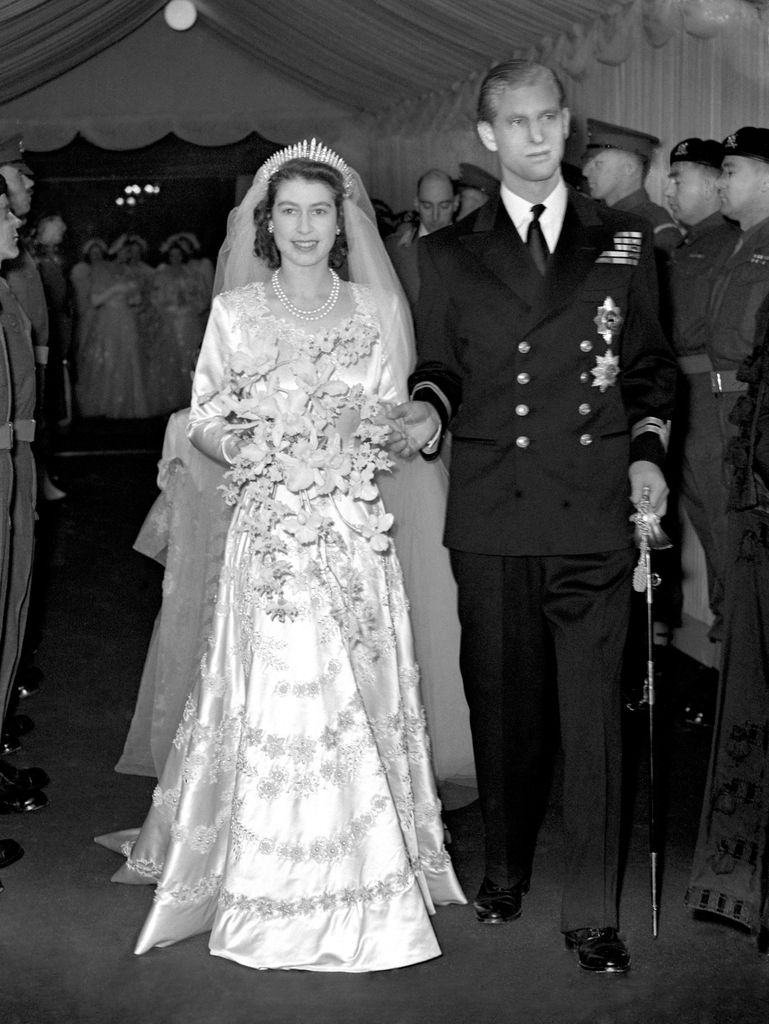
The royal bride wore Queen Mary’s Fringe Tiara, featuring 47 bars of diamonds, which underwent last-minute repairs hours before she walked down the aisle.
While adding the finishing touches to her white satin dress by Sir Norman Hartnell, inspired by Botticelli’s famous painting Primavera, the tiara snapped and was taken to the royal jewellery house, Garrard, via police escort to be welded back together.
 © PA Images via Getty Images
Recalling the “alarming” memory at an exhibition of Kate’s wedding dress in 2011, the late monarch explained: “The catch, which I didn’t know existed, it suddenly went. And I didn’t know it was a necklace, you see… I thought I’d broken it… We stuck it all together again, but I was rather alarmed.”
Queen Elizabeth went on to loan the tiara to her daughter Princess Anne in 1973, and granddaughter Princess Beatrice in 2020 for their respective weddings.
Changing history
 © Getty Images
Elizabeth was reportedly blindsided by her uncle’s abdication. The documentary Elizabeth: Our Queen tells how a young Princess Elizabeth, aged ten, had started her day with her usual swimming lesson, before returning home to write up her notes from her class, when she heard cries of ‘God Save the King’ from outside.
When she asked the footman what was happening, he explained that her father was set to be the new King. After breaking the news to her younger sister, Princess Margaret, she replied: “Well, does that mean you’re going to be Queen now? Poor you!”
It was only just over a decade later that she was informed of her father King George’s passing while on a royal tour in Kenya, and she was later crowned shortly afterwards in June 1953 at age 27.
Queen Elizabeth II and her hidden love affair with fashion
The late monarch proudly flew the flag for British fashion throughout her reign, as seen in the new exhibition Queen Elizabeth II: Her Life in Style

Queen Elizabeth II was renowned for her devotion to duty, her faith, her family, her horses and her Pembroke Welsh corgis. Fashion, in the popular imagination, was not her priority. This is a view rebutted by Caroline de Guitaut, who, in addition to her job as surveyor of the King’s works of art, is masterminding the most comprehensive exhibition ever staged of the late Queen’s clothing, in The King’s Gallery at Buckingham Palace.
Caroline tells HELLO! in this exclusive interview that visitors will see proof that Elizabeth II was both an admirer of fine couture and a trendsetter who influenced fashion houses including Gucci.
“One of the things that has been written about the Queen in the past is that she wasn’t interested in fashion,” Caroline says. “The media compared her with her younger sister [Princess Margaret], who went to Paris couturiers, whereas the Queen was supporting the best of British. [Her style] was elegant, restrained and appropriate but something she made recognisable. She absolutely followed fashion.”
“Elizabeth II was both an admirer of fine couture and a trendsetter who influenced fashion houses including Gucci.”
The collection, which is kept together at the personal request of King Charles, begins with two little-known bridesmaid dresses that Elizabeth wore in the early Thirties, one with striking frills on the shoulders that gave the young Princess the air of an angel.
 © Royal Collection Trust
She wore it for the wedding of her uncle Prince George, Duke of Kent to Princess Marina of Greece and Denmark.
Caroline says that the bridesmaid dresses are among her favourites because they are “so lovely and touching and so unknown”. Edward Molyneux’s designs, alongside those of fellow IncSoc founders Norman Hartnell and Hardy Amies, are vital to understanding Elizabeth’s style.
“They’re not really household names in the same way as Christian Dior or Coco Chanel,” she tells us. “It’s very telling, the way a bond was formed with the key figures in London couture.
“The other [bridesmaid dress] was her first Norman Hartnell dress – from 1935, from Prince Henry, Duke of Gloucester’s marriage to Lady Alice Montagu-Douglas-Scott.” Queen Elizabeth the Queen Mother took her daughter to Norman Hartnell’s workshop to see garments being made.
The late Queen’s most memorable fashion moment came on 20 November 1947, when the public got their first view of her Chinese-silk wedding dress with its 15ft star-patterned train.
 © Popperfoto via Getty Images
Anticipation had reached such a frenzy that Norman Hartnell whitewashed the windows at his salon in Bruton Street, Mayfair, lest someone glimpsed the gown. “He was so nervous that the embargo would be broken that he went to the Queen,” Caroline says. “He said that he and his team were on standby to create an alternative [dress].”
Although it is now commonplace for the public to imitate celebrity fashions, it was “really unusual” before the Queen’s ascendancy. “Every time she wore something, people would copy it,” Caroline says.
She cites Christopher Kane’s 2011 collection of neon-coloured pastiches of the Queen’s looks and Alessandro Michele’s 2017 Cruise show for Gucci as having been directly inspired by her “classic day look”, adding: “Sometimes they converted it into something else, but it was inspired by her.”
 © Tim Graham Photo Library via Getty
The Queen was involved in the minutiae of her clothing and could be intolerant of frippery. “When carrying out duties, she didn’t want to worry about her clothes, so extra pockets or bows or embellishments were just going to get in the way. Extra things had to be avoided at all costs.”
One example is her Bernard Weatherill houndstooth tweed hacking jacket. “Pockets are finished in different ways, depending on what she put in them. The cotton-lined ones were more durable; the silk-lined ones might have been for riding gloves. There was a hierarchy of pockets,” Caroline says.
She says that the Queen never wore anything by accident, especially when she planned events such as her first Commonwealth tour, which lasted almost six months. “They were planned months in advance. Wearing nothing by accident is a really interesting expression.”
For the 1967 centenary of the confederation of Canada, she wore a blue and white dress embroidered with maple leaves on the hip line. On a state visit to Pakistan in 1961, she wore a green and white Norman Hartnell dress to a state banquet in Karachi, to match the colours of Pakistan’s flag.
 © Getty Images
If the monarch ever had regrets about her choices, she never mentioned it, even when her outfits caused a frisson.
“She wore a green neon ensemble for her 90th birthday, and it caused a sensation that a 90-year-old woman would wear such a vivid and contemporary colour,” Caroline recalls. But it was a carefully considered decision planned long in advance. “I don’t think it would get to the point of regret.”
Queen Elizabeth II: Her Life in Style is at The King’s Gallery, Buckingham Palace, from 10 April to 18 October; rct.uk
Queen Elizabeth’s strict rules about pockets she enforced with staff
Queen Elizabeth II: Her Life in Style opens at Buckingham Palace on 10 April, and the exhibition is selling out fast
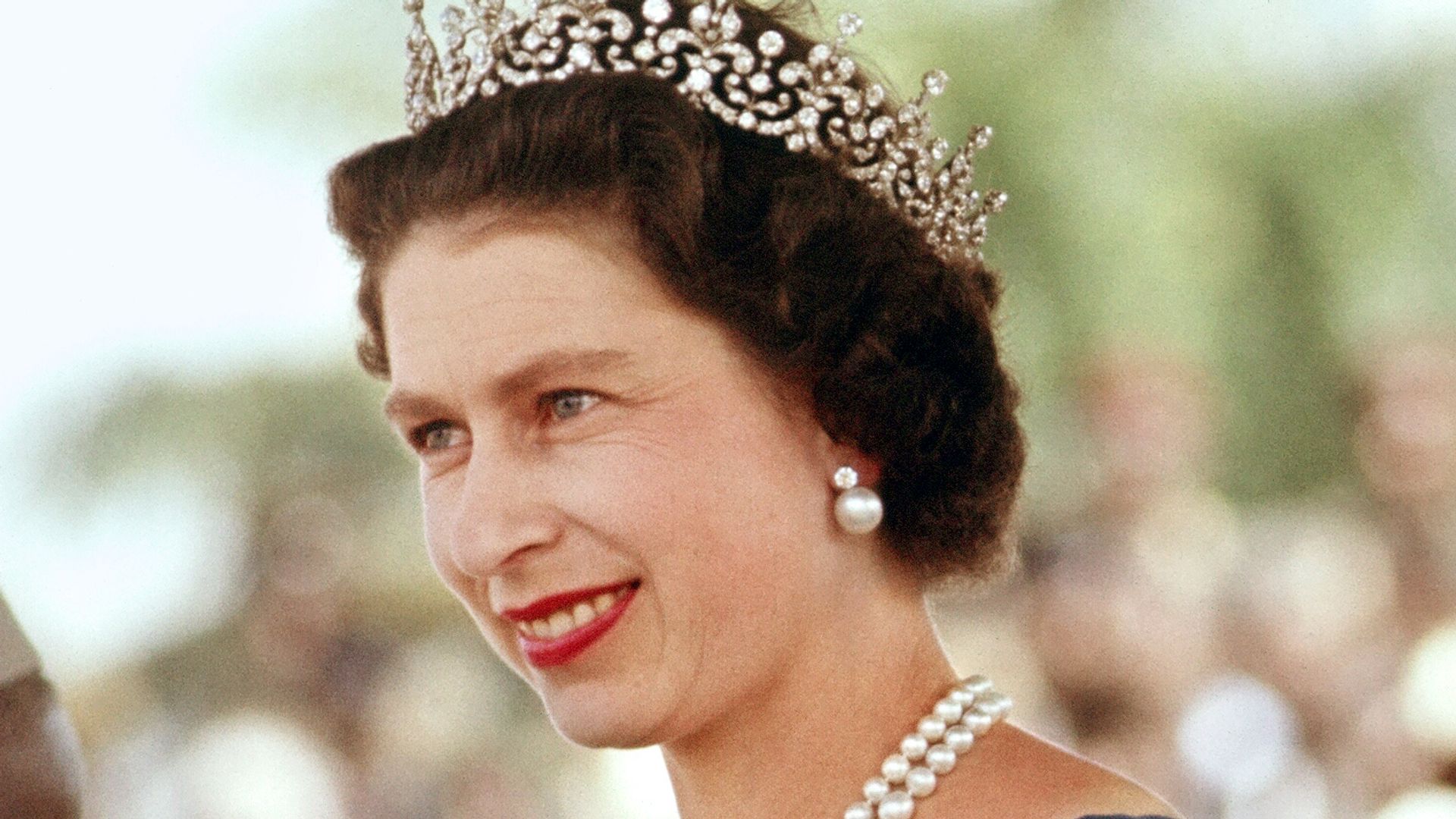
Royal fans are eagerly awaiting the new regal fashion exhibit, Queen Elizabeth II: Her Life in Style, which opens at Buckingham Palace on 10 April. The extensive offering, which is the largest and most comprehensive exhibition of the late Queen’s fashion to ever be presented, takes place at The King’s Gallery, the place she was christened, before the chapel was destroyed in the Blitz.
Caroline de Guitaut, Surveyor of the Queen’s Works of Art at the Royal Collection Trust, is the mastermind behind the exhibition and exclusively told HELLO! that the monarch was “elegant, restrained and appropriate,” and that she “absolutely followed fashion.”
 © Bettmann Archive
Pockets of style
Elizabeth’s outfits were meticulously selected and designed, and one signature add-on that was always thought of was the humble pocket. The sizes were crafted according to what she would be carrying that day.
 © Getty Images
“Pockets are finished in different ways, depending on what she put in them. The cotton-lined ones were more durable; the silk-lined ones might have been for riding gloves. There was a hierarchy of pockets,” Caroline mused.
Elizabeth’s heritage
The collection starts with two little-known bridesmaid dresses that Elizabeth wore in the early thirties, one with striking frills on the shoulders that gave the young Princess the air of an angel.
 © Royal Collection Trust
She wore it for the wedding of her uncle, Prince George, Duke of Kent and Princess Marina of Greece and Denmark.
Caroline says that the bridesmaid dresses are among her favourites because they are “so lovely and touching and so unknown”.
Queen Elizabeth’s wedding dress
The late Queen’s most memorable fashion moment came on 20 November 1947, when the public got their first view of her Chinese-silk wedding dress with its 15ft star-patterned train.
 © Topical Press Agency
Anticipation had reached such a frenzy that the designer of the dress, Norman Hartnell, whitewashed the windows at his salon in Bruton Street, Mayfair, in case someone glimpsed the gown. “He was so nervous that the embargo would be broken that he went to the Queen,” Caroline says. “He said that he and his team were on standby to create an alternative.”
Related Articles


Featured Posts

Little Chihuahua Sent to Shelter for Wanting to Sleep in Bed with Owners





:max_bytes(150000):strip_icc():focal(749x0:751x2):format(webp)/nick-carter-and-melissa-schuman-081324-b9416d36e8a44ba98d751198aab7121a.jpg?resize=750,500&ssl=1 "Nick Carter Sues Rape Accuser Melissa Schuman for .5 Million, Alleges She Intentionally Defamed Him")




:max_bytes(150000):strip_icc():focal(749x0:751x2)/john-mulaney-olivia-munn-baby-mei-tout-092224-2b02a866b7b14047943d6b70fc02f5ae.jpg?resize=1500,1000&ssl=1 "Olivia Munn and John Mulaney Reveal Arrival of Second Baby After Munn’s Cancer Journey: ‘Little Plum, Little Dragon’")
:max_bytes(150000):strip_icc():focal(749x0:751x2):format(webp)/tout-Underweight-Dog-050426-c32e0d4b6e5447f1a7f1141e4080398c.jpg?resize=750,500&ssl=1 "Underweight Stray Dog, with ‘Dangerously Low’ Body Temperature, Rescued and Given New Name While Being Nursed to Health")



:max_bytes(150000):strip_icc():focal(745x234:747x236):format(webp)/Bristal-Brewster-1-050726-7115d79c6c614189aefa39b2e1a4b783.jpg?resize=750,500&ssl=1 "Parents Notice Their Toddler’s Sudden Limp. An MRI Scan Revealed the Devastating Reason (Exclusive)")

:max_bytes(150000):strip_icc():focal(749x0:751x2)/jennifer-aniston-111225-c037a077dd3043178ee27f4038312cd6.jpg?resize=1500,1000&ssl=1 "Jennifer Aniston Overcomes the Pain of Infertility")




:max_bytes(150000):strip_icc():focal(764x9:766x11)/Will-Smith-Says-Hes-Lost-Sleep-Over-Potentially-Penalizing-His-Emancipation-Crew-After-Oscars-Slap-112922-2b5ef96896d34b7e8c33f4a36aee6cf4.jpg?resize=1500,1000&ssl=1 "Will Smith Sued")
:max_bytes(150000):strip_icc():focal(728x329:730x331)/michael-douglas-wall-street-020226-2-f626de6e6c884382ae5e9697d94db977.jpg?resize=1500,1000&ssl=1 "Why Is Michael Douglas Halting His Career Following Tongue Cancer Treatment?")