

“Nothing’s going to happen until Putin and I get together,” Donald Trump declared last week after Russia’s president failed to turn up for Ukraine peace talks in Turkey that the Kremlin had instigated. The two leaders did get together on Monday, by phone, for two hours. But nothing happened. The US president said Kyiv and Moscow would start negotiations towards a ceasefire, but he was leaving it up to the belligerents to sort things out. There was no sign of the pressure he had hinted he might finally put on his Russian counterpart. Instead, the US president gave the impression he was walking away from the peace efforts.
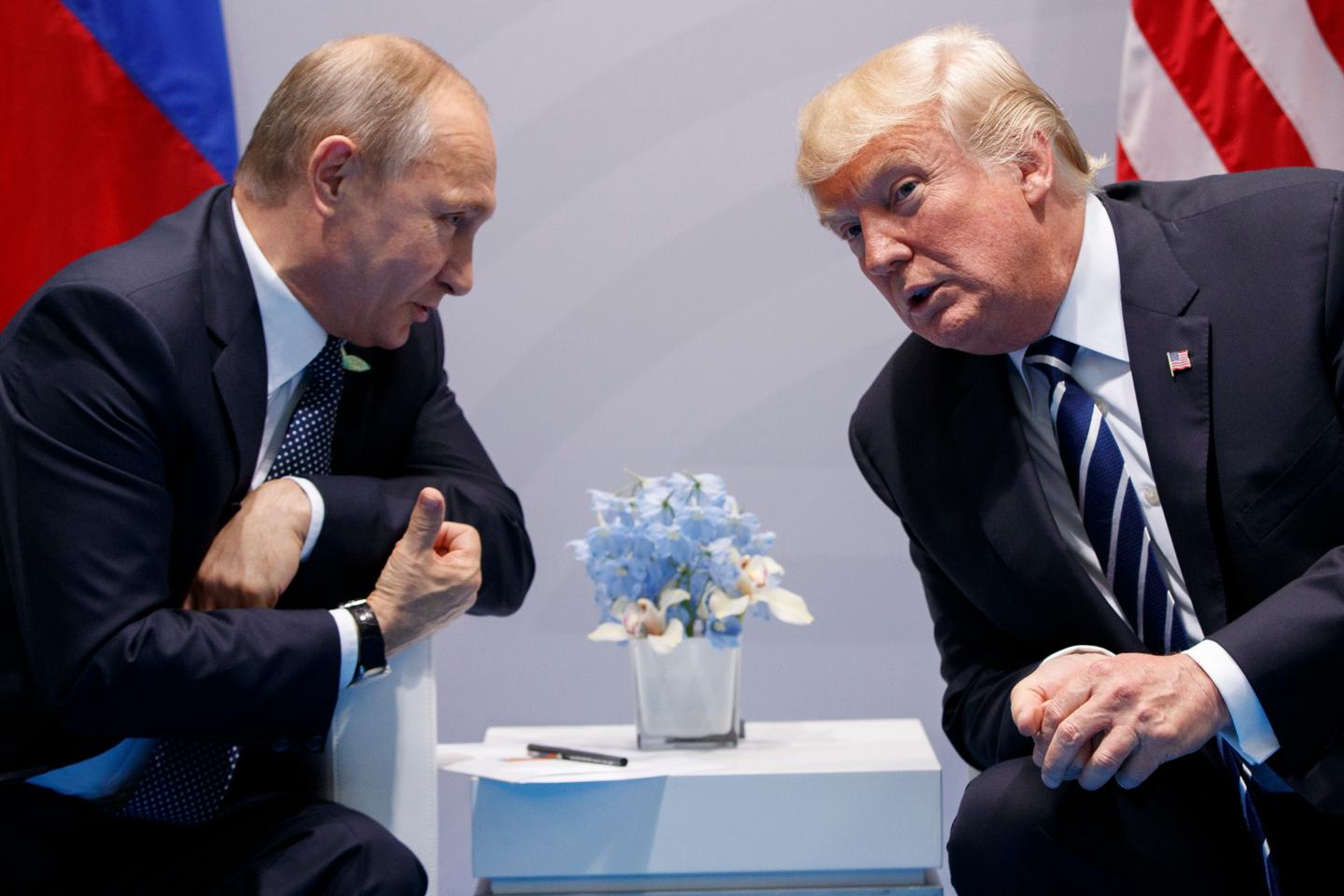
Trump’s indulgence of a Russian leader who has been stringing him along for months remains baffling. He has repeatedly threatened to get tough unless Putin accepts a ceasefire and comes to the negotiating table. Each time he has held back. By doing so, Trump is playing into Moscow’s hands. He emboldens Putin to fight on, when Russian forces have the edge on the battlefield against a Ukraine that fears US military backing could at any moment be withdrawn. Putin seems to believe that his goal of subjugating Ukraine can either be achieved without jeopardising the economic reset Trump is still promising with the US, or takes precedence over all else.

The US president said later on Monday that Washington was not pulling back from the Ukraine conflict, though it was considering whether to do so. A master of the diplomatic deal would realise now is not the moment to withdraw, but to step up pressure on Russia’s leader to come to terms. If the White House will not, Congress and Ukraine’s other allies must do so instead.
European countries will need to move quickly to implement plans to keep arms flowing to Kyiv if the US walks away, including by buying American weapons and funding Ukraine’s own expanded military industry. They should double down, too, on efforts to shift Putin’s calculus over how long he can keep fighting — by tightening the sanctions noose on Russia’s economy, which, despite its apparent resilience, faces mounting underlying pressures.

Most effective would be to close loopholes and lower the price cap on Russian oil exports, which do most to sustain its war economy. Moscow has partially evaded the cap by using its fleet of “shadow” tankers. But concerted recent sanctions on shadow vessels are estimated to have almost halved the Russian fleet’s usable capacity — forcing Russian exporters to rely more on sanctions-compliant mainstream tankers. That gives policymakers more leverage over oil export revenues.

After further EU sanctions this week targeted nearly 200 shadow ships, Brussels is presenting to G7 finance ministers in Canada a plan to use its next sanctions package to lower the price cap — hoping the White House will sign up. Russia hawks in the US Senate, meanwhile, including some senior Republicans close to Trump, have prepared a bill that would impose secondary tariffs of 500 per cent on imports from countries that buy Russian oil, gas or uranium, if Moscow does not engage seriously in Ukraine talks.

The Senate move is intended to give the president a tool should he choose to use it, but — since it is said to have a veto-proof majority — it opens the possibility of Congress acting on its own if he does not. But by wielding jumbo tariffs, the Senate plan could further destabilise the world economy. The plan should be amended instead to join G7 efforts to push down the oil price cap.
These are dark days for a Ukraine fearful that a US president is about to sell it down the river. It is up to its other friends — in Congress and other western capitals — to come good on their promises of support and avert that disaster.
Trump’s approval rating ticks lower, economic concerns weigh, Reuters/Ipsos poll finds

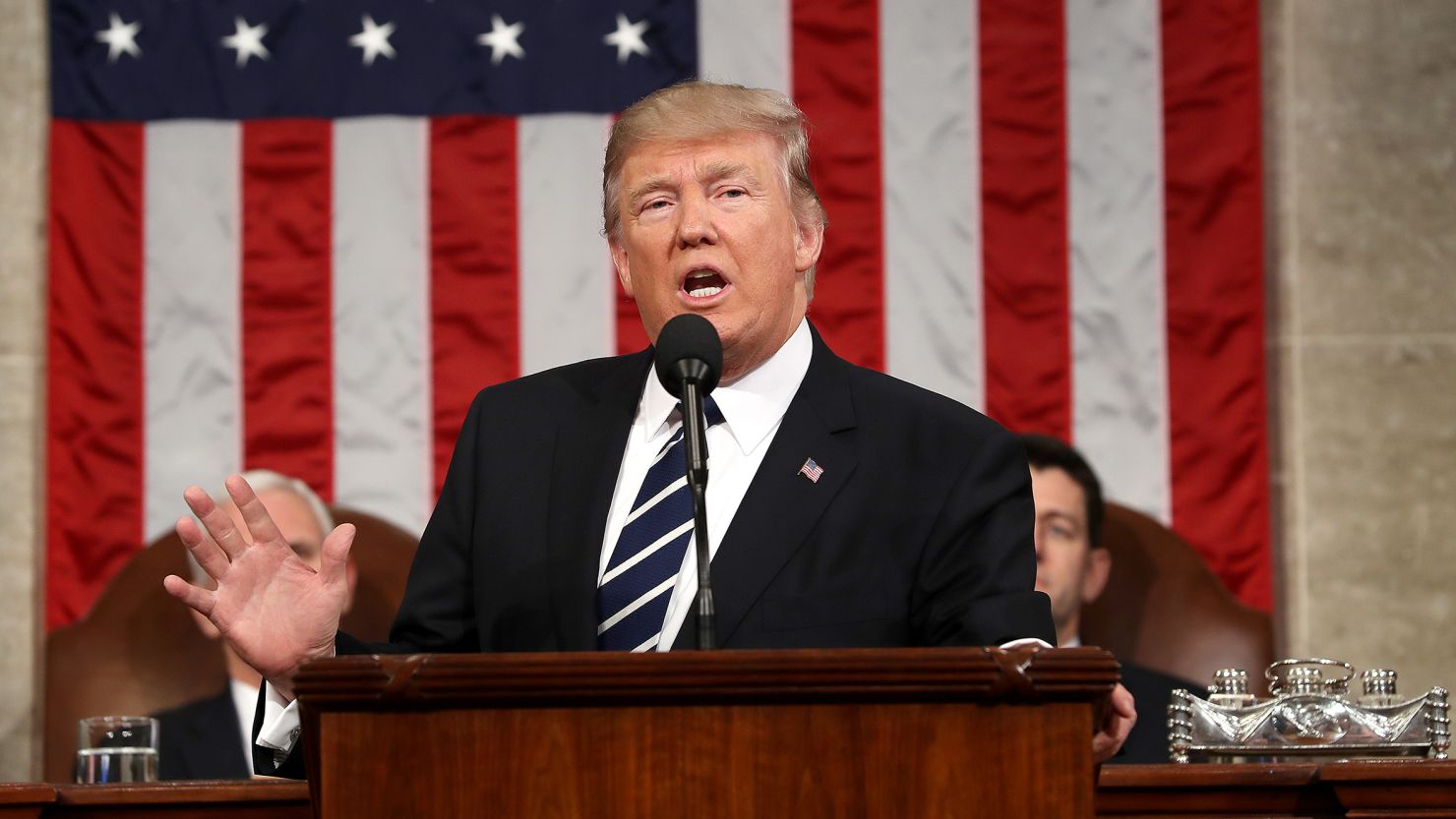
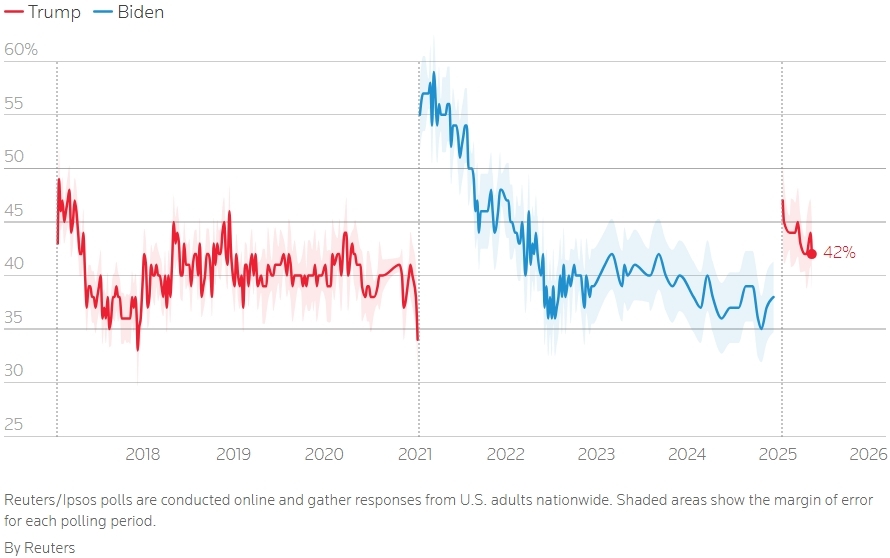
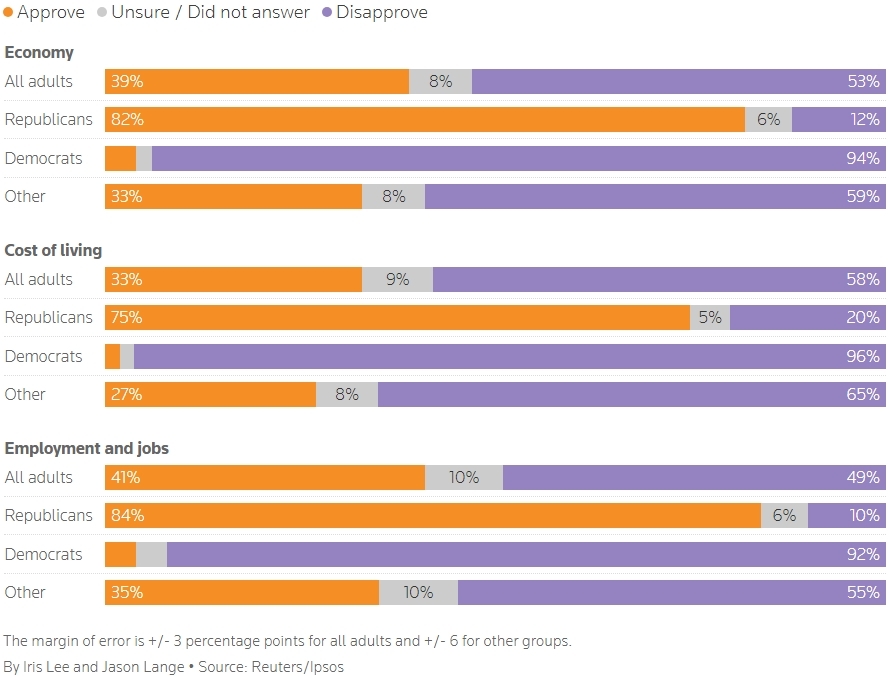
Trump’s high point remains his 47% rating in the hours after his return to the White House in January. His approval has shown little movement in recent weeks. Just 39% of respondents in the poll said Trump was doing a good job managing the U.S. economy, unchanged from a week earlier.
What share of Americans approve of the president’s job performance?
Trump won the 2024 presidential election on a promise to bring about a golden age for the U.S. economy, but his aggressive measures to reshape global commerce – including levying heavy tariffs on major trading partners – have increased the risks of recession, economists say.
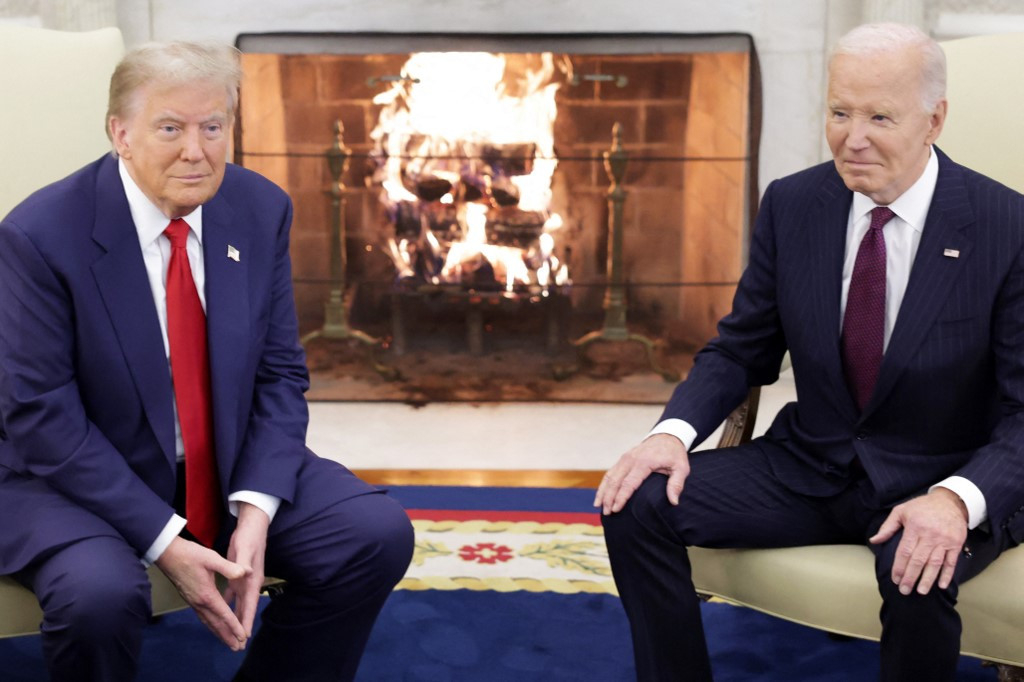
Inflation rates in the United States soared under Biden but have been trending lower for several years. Some 33% of respondents in the latest Reuters/Ipsos poll gave Trump a thumbs up on how he was managing the cost of living, up from 31% a week earlier.
What Americans think of Trump’s performance
Reuters/Ipsos polled 1,024 U.S. adults on May 16-18
He has urged the country’s independent central bank, the Federal Reserve, to lower interest rates, but central bankers have also expressed worry over the prospects of higher inflation.
The Reuters/Ipsos poll, carried out online and nationwide, surveyed 1,024 U.S. adults May 16-18.
Reporting by Jason Lange; Editing by Scott Malone and Deepa Babington
.
Latest on Trump’s presidency as key House GOP panel meets on domestic policy bill
What we’re covering
• Happening now: A key House committee convened in the early hours of Wednesday in a bid to advance President Donald Trump’s domestic policy bill, a critical step ahead of a floor vote. But key sticking points remain amid policy disagreements between GOP conservatives and moderates even after Trump expressed confidence after meeting with House Republicans on Capitol Hill.
• Defense costs: Trump said he believes his Golden Dome missile defense project will be complete by the end of his term, an estimate that runs contrary to what military officials have previously told CNN.
• Sparring over cuts: Several Cabinet secretaries have defended their policies on the Hill. At one point, Health and Human Services Secretary Robert F. Kennedy Jr. and a top Democrat sparred over HHS cuts, including their impact on a National Institutes of Health cancer trial.

Trump’s ratings are lowest on some of the economic issues Americans care most about, poll finds

President Donald Trump’s rating on economic issues continues to stand well below his overall numbers for handling the presidency, a new Marquette Law School poll finds, even as economic concerns remain at the forefront of many Americans’ minds.
Roughly half of US adults pick either inflation and the cost of living (36%) or the economy more broadly (13%) as the issue that currently matters most to them, the survey finds, with 19% picking threats to democracy, 10% Medicare and Social Security, and 9% immigration and border security. Fewer than 5% choose the size of the federal deficit, health care, abortion policy, or foreign policy, respectively, as their biggest issue.
Most, 63%, say they expect inflation and the cost of living to increase over the next 12 months.
Trump’s approval rating stands at 42% on the economy, 37% on tariffs and just 34% on inflation and the cost of living.By contrast, the survey finds the public evenly split on his handling of immigration, with a 56% majority approving of his handling of border security.
The poll finds that 46% of Americans approve of Trump’s handling of his job overall, while 54% disapprove, among the more positive recent readings on his presidency. In CNN’s Poll of Polls average of four surveys conducted in May, including the Marquette survey, Trump’s approval rating stands at 42%, with 55% disapproving. The latest Poll of Polls average, as well as a chart of Trump’s average approval rating over time, is available here.

The Marquette Law School Poll surveyed 1,004 US adults on May 5-15, using the nationally representative SSRS Opinion Panel to conduct online interviews. Results among the full sample have a margin of error of +/-3.6 percentage points.
Trump policy bill would increase deficit by $3.8 trillion, according to preliminary analysis
.
The non-partisan Congressional Budget Office released a preliminary analysis of the impacts of President Trump’s sweeping domestic policy bill and found that it would increase the budget deficit by $3.8 trillion between 2026-2034.
It also found that the bill would cut federal support for Medicaid by $698 billion and reduce federal funding for food stamps, also known as SNAP, by $267 billion.
The analysis, which was requested by House Democratic leaders, reviewed the bill that was approved by the House Budget Committee on Sunday night.
It does not include late changes now being negotiated by Speaker Mike Johnson and a group of holdouts in his conference who are demanding further revisions.
The bill has not yet been passed by the House. Senate Republicans are expected to make further changes when it comes to their chamber for consideration.

Tension mounts among House Republicans as warring wings remain at odds over Trump’s bill
House Republicans pointed fingers at each other today as sticking points leave both moderates and hardliners declining to say if they’ll ultimately vote for President Donald Trump’s major policy bill, even after the president came to Capitol Hill to rally support and urge unity in the conference.
Here’s what some Republicans are saying:
Rep. Don Bacon: “We have to defend against it, because they’re, in a sense, putting poison pills in that won’t pass. That’s what the president’s saying. So I hope they heed the president, I hope they listen to him,” the swing district Republican told CNN, referring to changes to the federal-state cost sharing system and other provisions to roll back Medicaid.
Rep. Ralph Norman: A hardliner who sits on the House Rules Committee, would not say if he’s going to vote to advance the bill, calling his support “a moving target” and explaining that he wants to see changes to a state and local tax deductions (SALT) cap paid for if they’re included.
Rep. Andy Ogles told CNN: “I would say that if the vote were held right now, it dies a painful death.”
Rep. Keith Self: Asked if he’s still a “no” on the bill, the hardliner said, “we haven’t made the corrections yet.”

Rep. Troy Nehls: The Trump ally warned that opposing the bill could come back to haunt GOP members. “Here’s an opportunity under a unified government, meaning control, Republican control, to get the tax cuts, to get so many great things, and if there’s one or two issues that you don’t agree with, well I’m going to tank the bill. That’s not healthy,” Nehls said, adding that the constituents of the hardliner representatives may raise questions about this approach.
Rep. Thomas Massie: The Kentucky Republican, whom Trump threatened with a primary earlier in the day over his defiance to the bill, said he wasn’t worried that his voters would listen to Trump and that he had a “fairly cordial” interaction with the president. Asked if Trump’s threat would force him to fall in line to support the bill, Massie laughed and said, “no.”
Rep. Mike Lawler: The New York Republican accused House Speaker Mike Johnson and another key Republican committee leader of trying a last-minute maneuver to force lawmakers supportive of a higher cap on state and local tax deductions to support the bill. “I’m not going to sacrifice my constituents and throw them under the bus in a bad faith negotiation,” Lawler said.

Trump tax-cut bill faces rare overnight stress test with US House Republicans
Trump huddled with lawmakers on Tuesday to try to persuade holdouts within his party to get in line on what he calls a “big, beautiful bill,” but the visit failed to sway the wide array of lawmakers who object to specific features.

House Speaker Mike Johnson has little room for error, as his party holds a narrow 220-213 majority and a handful of “no” votes from his side could scuttle the bill, which Democrats say favors the wealthy and cuts needed social programs.

Fiscal hawks blocked the package in another committee on Friday, before relenting late on Sunday night. That scenario could play out again in the Rules Committee, which includes several Republicans who are calling for deeper cuts to the Medicaid health program, which serves 71 million Americans.
The bill would extend the 2017 tax cuts that were Trump’s signature first-term legislative achievement, and also add tax breaks on income from tips and overtime pay that were part of his populist push on the campaign trail. Nonpartisan analysts say it could add $3 trillion to $5 trillion to the federal government’s $36.2 trillion in debt.


Reporting by Bo Erickson and David Morgan, writing by Andy Sullivan; Editing by Scott Malone and Rod Nickel

Fact check: Trump claimed the US doesn’t do ‘much business with Canada.’ Canada is the world’s top buyer of US exports
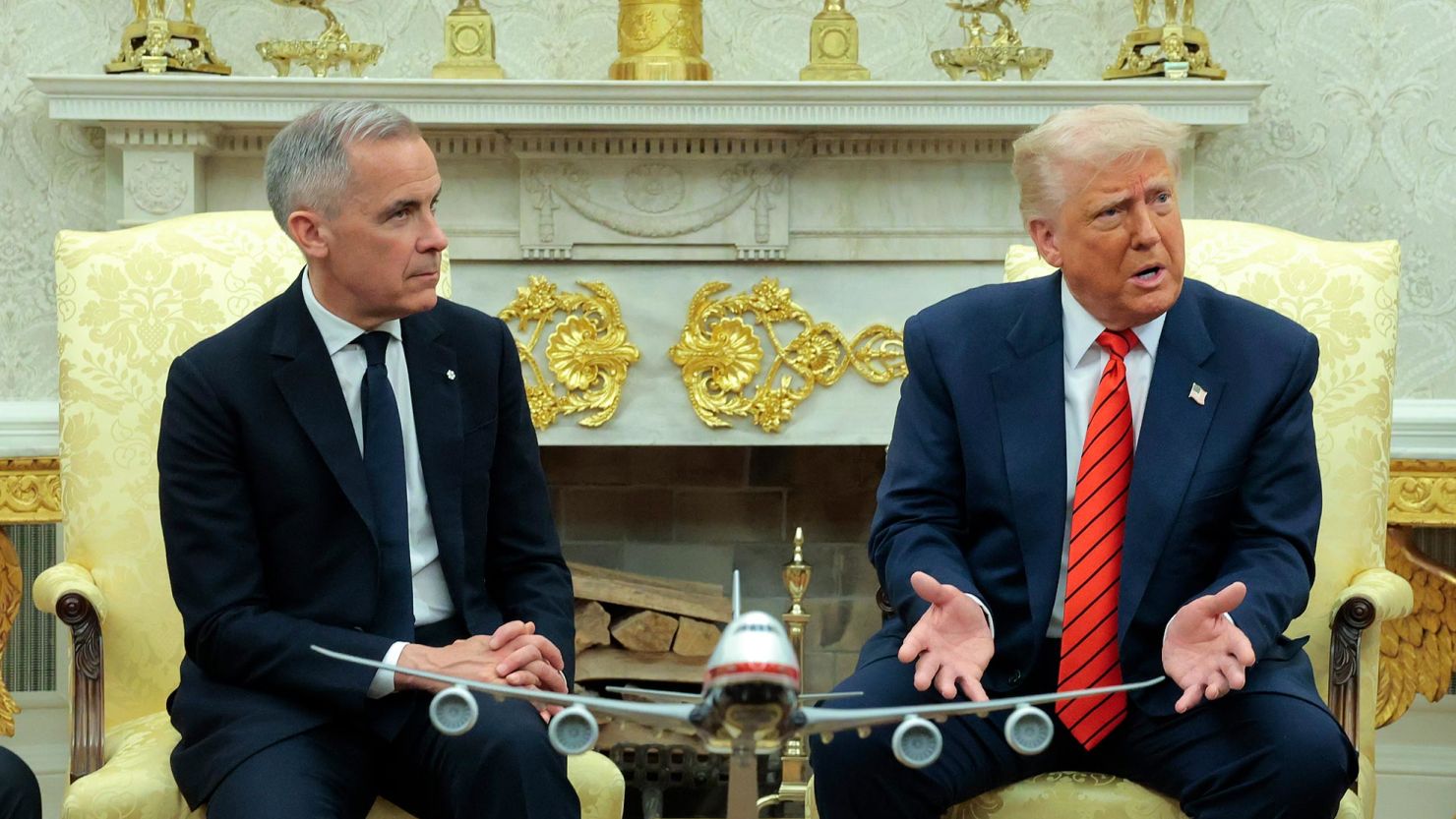
During his Tuesday meeting with Canadian Prime Minister Mark Carney, President Donald Trump falsely minimized the importance of the US trade relationship with Canada.
“We don’t do much business with Canada from our standpoint. They do a lot of business with us. We’re at like 4%,” Trump said.
That “4%” figure is wrong. Official US data shows that Canada bought about 17% of US goods exports in February and March, the last month for which data is available – more than any other country. Canada bought about 16% of US goods exports in January, second only to Mexico.
Trump’s “we don’t do much business with Canada from our standpoint” claim is too subjective to render a definitive fact-check verdict, but Carney’s remark that “we are the largest client of the United States” is confirmed by the US government itself. Official US data shows that Canada bought about $440 billion worth of US goods and services in 2024, more than any other country, and the Office of the US Trade Representative notes on its website that “in 2024, Canada was the top destination for U.S. exports” as well as “the third-largest source of U.S. imports.”
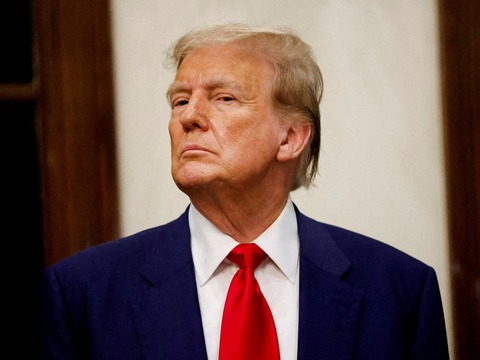
Trump also repeated his frequent claim that the US is “subsidizing Canada to the tune of maybe $200 billion per year.” Trump has previously made clear that he is speaking about the US trade deficit with Canada, but that is not even close to $200 billion. Official US statistics show the 2024 deficit with Canada in goods and services trade was about $36 billion.
Even if you only count trade in goods and ignore the services trade at which the US excels, the deficit was about $71 billion. And even if he was this time using the word “subsidizing” to describe unspecified other things in addition to the trade deficit, there is no basis for the claim.
Related Articles



Featured Posts

Stray Puppy Wanders Onto Naval Base And Finds The Hero He Needed To Survive







:max_bytes(150000):strip_icc():focal(749x0:751x2):format(webp)/tout-Underweight-Dog-050426-c32e0d4b6e5447f1a7f1141e4080398c.jpg?resize=750,500&ssl=1 "Underweight Stray Dog, with ‘Dangerously Low’ Body Temperature, Rescued and Given New Name While Being Nursed to Health")



:max_bytes(150000):strip_icc():focal(745x234:747x236):format(webp)/Bristal-Brewster-1-050726-7115d79c6c614189aefa39b2e1a4b783.jpg?resize=750,500&ssl=1 "Parents Notice Their Toddler’s Sudden Limp. An MRI Scan Revealed the Devastating Reason (Exclusive)")

:max_bytes(150000):strip_icc():focal(749x0:751x2)/jennifer-aniston-111225-c037a077dd3043178ee27f4038312cd6.jpg?resize=1500,1000&ssl=1 "Jennifer Aniston Overcomes the Pain of Infertility")



:max_bytes(150000):strip_icc():focal(764x9:766x11)/Will-Smith-Says-Hes-Lost-Sleep-Over-Potentially-Penalizing-His-Emancipation-Crew-After-Oscars-Slap-112922-2b5ef96896d34b7e8c33f4a36aee6cf4.jpg?resize=1500,1000&ssl=1 "Will Smith Sued")
:max_bytes(150000):strip_icc():focal(728x329:730x331)/michael-douglas-wall-street-020226-2-f626de6e6c884382ae5e9697d94db977.jpg?resize=1500,1000&ssl=1 "Why Is Michael Douglas Halting His Career Following Tongue Cancer Treatment?")