
There’s no four-dimensional chess here. There’s just the president, and what we know he’s like.
This is an adapted excerpt from MS Now’s Feb. 28 special coverage.
Early Saturday morning, the United States started a war with Iran for some reason. Your guess is as good as anyone’s as to why the president of the United States did this.
In terms of pure rational deduction about what he’s doing here, we can rule out all the reasons he has said he is doing it.
Is Iran on the precipice of having ballistic missiles that can reach the United States? Absolutely not. The United States is very far from Iran. One might even say it’s a whole continent away, which means a missile launched from there to hit us here would have to be an intercontinental ballistic missile.
Does Iran have intercontinental ballistic missiles? No, it does not. And there is no known evidence, or even serious allegation, that it’s anywhere near developing one anytime soon. Even Secretary of State Marco Rubio has recently admitted that the threat is only that maybe one day Iran might have that kind of capability. One day. Just like you or I might one day learn to fly! Or to time travel!
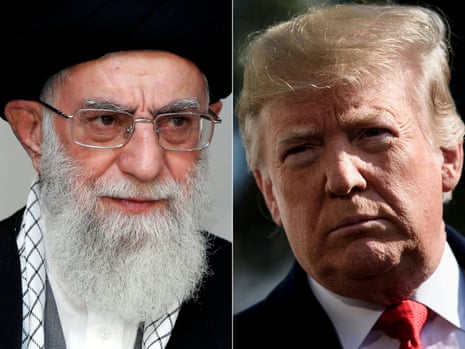
Is Iran a week away from industrial-grade uranium enrichment? That’s what the president’s diminutive real estate friend, Steve Witkoff, asserted this week when asked about the Iran talks he’s inexplicably part of on behalf of the United States, despite his only relevant experience and training being that he is an old real estate friend of the president. But no, Iran is not. Not only has there been no American or international evidence or intelligence made public that Iran is doing that, but even the Trump administration says it’s not happening. Rubio, at a press conference in Saint Kitts and Nevis on Wednesday, told reporters, “They’re not enriching right now.”
Have we just started a war with Iran because they’ve got some advanced nuclear program that’s rushing toward a bomb? Ask President Donald Trump, who insists that the last time he ordered the bombing of Iran, it “totally obliterated” the country’s nuclear program. So it’s hard to say that anything “totally obliterated” — gone, pulverized, erased from the Earth — is now suddenly there again, and so a war must start.
So it’s not that they’re gonna get us with ballistic missiles. It’s not that they’re enriching uranium, and we don’t like that. It’s not their nuclear program, which Trump says he obliterated.
The president has said a couple of times in recent days that he just wants the Iranian government to say the words that they’re not pursuing a nuclear bomb. The Iranian government, actually, has said that over and over again; they’ll say it whenever you like. So that does not appear to be the reason either.
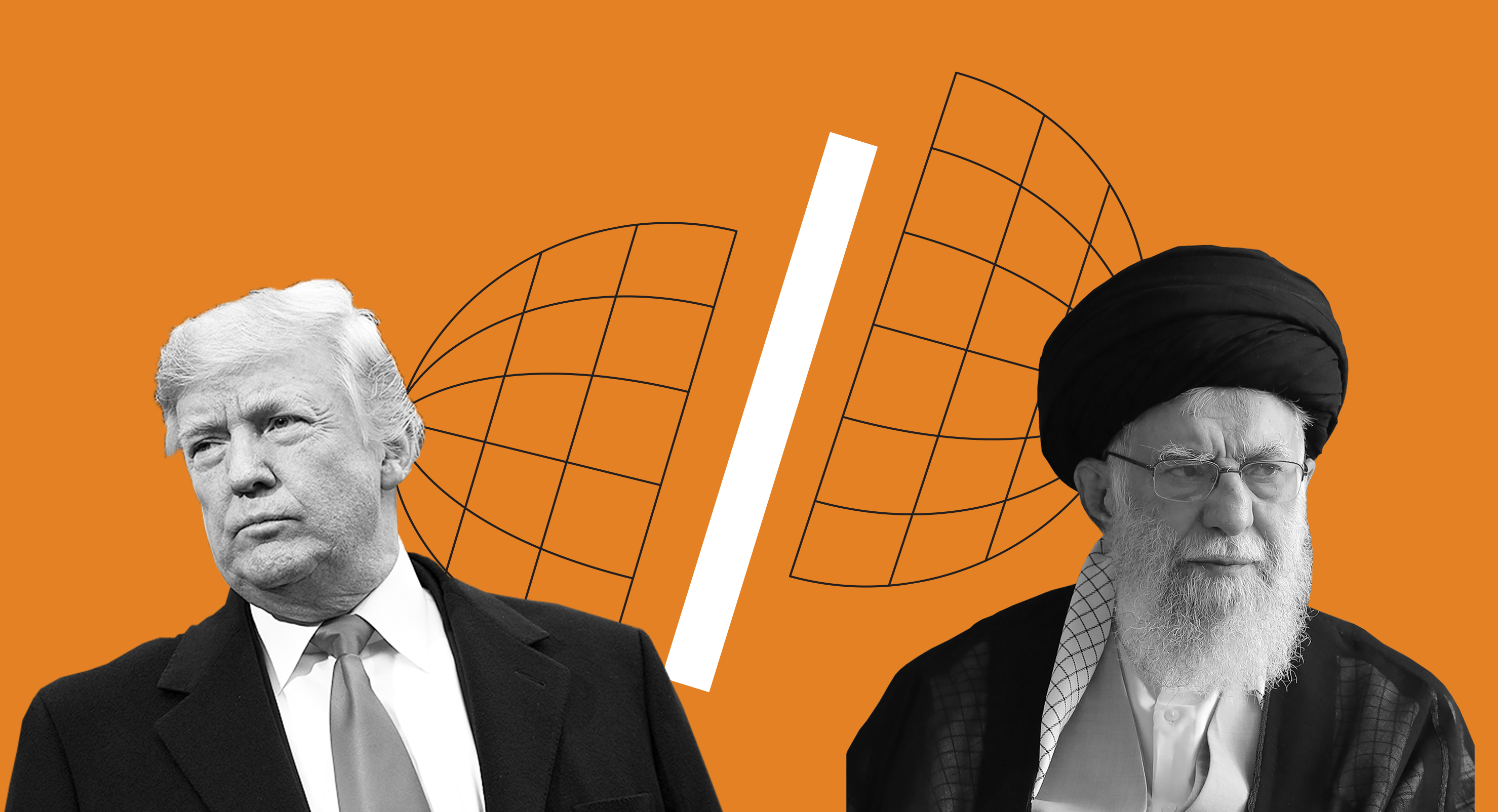
So why has the president just started a war with Iran?
Is it because his heart bleeds, empathetically, on a human level, for the protesters in Iran who have been killed by their own government in January and February? Is it because Trump really feels for those people, and that his heart throbs with a passionate support for the right of free speech, the right of people everywhere to protest against their own government, and not face violence because of it? Is that what you think? If so, good morning, hope you’ve slept well for this past decade in which you’ve been dead to the world.
But suspend disbelief for a moment.
Just suppose that the reason the United States of America has just started a war with Iran is because — as the president said in his weird prerecorded video message early Saturday morning — he wants the people of Iran to rise up and overthrow their government.
And maybe they will. Maybe they will try?
But Iran is a huge country. It’s 92 million people. It’s more than triple the population of Iraq or Afghanistan when we started disastrous regime change wars with those countries two decades ago.
Iran has regular military forces, but it also has a huge Revolutionary Guard force that has, effectively, its own army, navy, intelligence service and special forces. It plays a huge role in the massive, suffocating domestic security services that are happy to terrorize the Iranian people in the best of times, and to massacre the Iranian people in the worst times. They have massive economic interests. They have a huge hold on multiple sectors of the Iranian economy. And, to state the obvious, they are not the kind of force that’s going to go poof when Trump’s airstrikes manage to kill Iran’s supreme leader, Ayatollah Ali Khamenei. Iranian state media reported Sunday morning local time that the supreme leader has been killed.
But this isn’t Venezuela. There’s no vice ayatollah who’s going to step in to take over the top job.
If you voted for Donald Trump because you believed the hype that he was “America first,” that he was against foreign wars, that he was definitely against regime change wars… well, again, good morning, hope you slept well. But the president, in this case, says explicitly that this is a war we’re waging for regime change.
After the now-slain leader, Khamenei, who’s been in place since 1989, there’s no other person of that stature to just pop in place and say it’s done. And so if you really did want the Iranian people themselves to rise up in some kind of popular uprising and totally change their form of government — to organize very quickly into a new populist political force to rise up against, among other things, the security services there that have been massacring them by the thousands — you probably would have taken some steps to make sure they can organize and communicate.
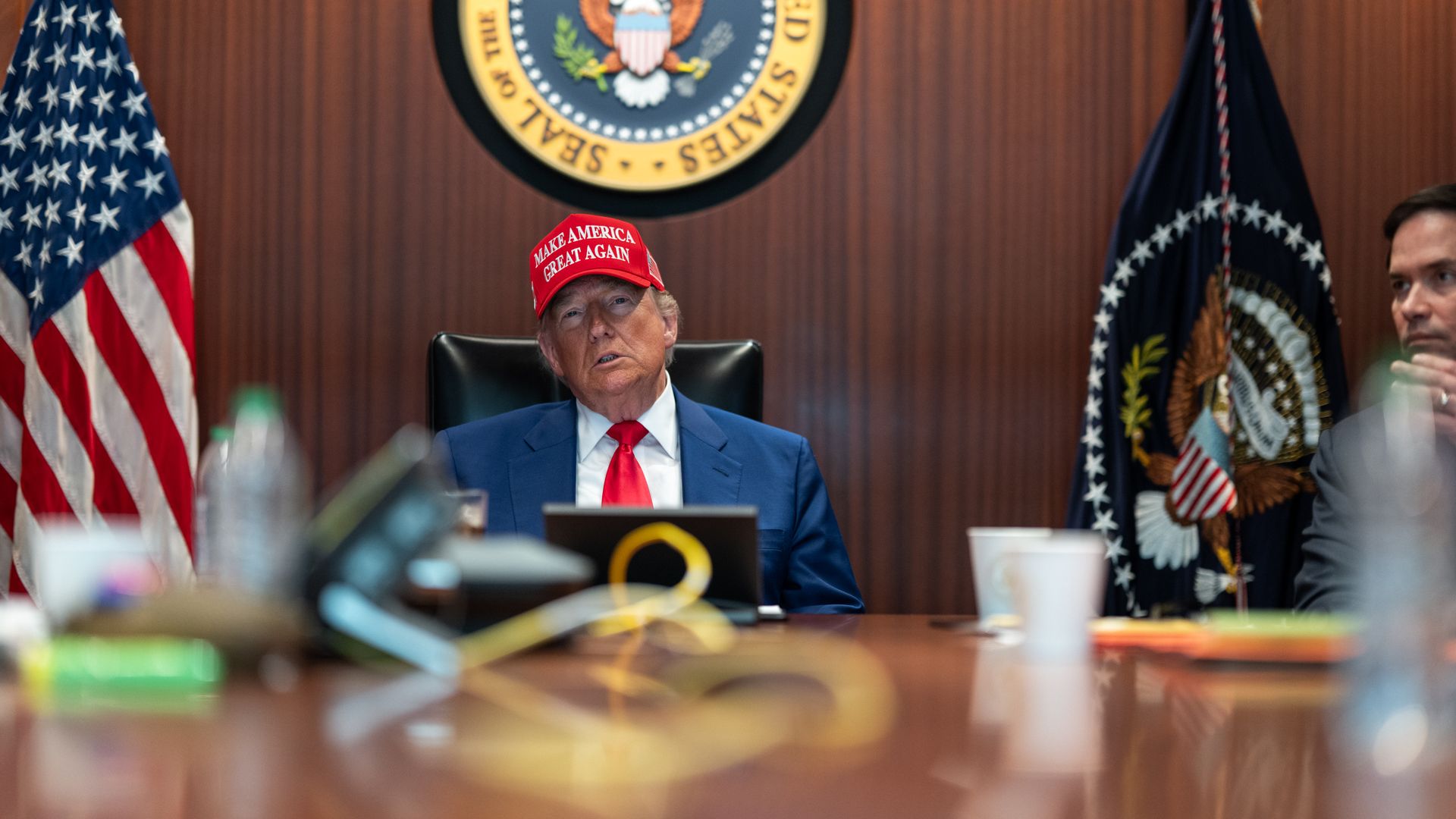
When you, Donald Trump, in your baseball hat, proclaimed on that weird taped message early Saturday morning that the police and the security forces and the Revolutionary Guard must surrender and lay down their weapons, you might have given them some instructions or some way to do that, which Trump did not.
You might have taken steps to turn the internet back on in Iran so the people there could reach each other and the world, and so the world could reach them too.
You might not have gutted the crucial Farsi-language Voice of America communications platform and put it in the hands of a soft-focus election-denier local news anchor most famous for proclaiming the fraudulence of American elections.
If this is a regime change war that Trump is seriously hoping the Iranian people will complete for him, there has been no serious or even unserious effort by the United States to make it possible for any uprising by the Iranian people to succeed.
And so why is this happening?
Well, cui bono? — who benefits?
It’s always useful to start with that question. In any country.
Who wants Iran bombed off the map, for their own reasons? Who are their rivals and enemies? Perennially, the Gulf Arab states, countries like Saudi Arabia, the United Arab Emirates and Qatar.
You know, Qatar. The country that just gave Donald Trump a really, really nice $400-milion-dollar plane, a gilded flying palace for his own use both during his presidency and after?
And you remember the United Arab Emirates, structuring a recent, totally pointless crypto financial transaction so that $2 billion of it was stuffed into the Trump family’s otherwise worthless brand new crypto financial firm?

And you remember the Saudis who stuffed $2 billion into the pockets of Trump’s son-in-law, Jared Kushner, just as Trump’s first term in office came to a close? Enough people were alarmed about that they actually bothered to come up with an excuse for what made it OK. They said, don’t worry, Jared will never again work for the U.S. government; he’s never coming back to Washington, so we’ll never have to worry about having someone involved in U.S. policy who has also been given billions of dollars by Saudi Arabia.
Well, who was leading the negotiations on behalf of the United States with Iran before we just started this war with them? I mean, Secretary of State Marco Rubio was in Saint Kitts and Nevis. It wasn’t him. It was Jared Kushner, who was recently paid billions of dollars by Iran’s chief rival, sitting alongside Trump’s tiny real estate friend, Steve Witkoff, whose son recently sought to improve his family fortunes by going to Qatar to seek money from its sovereign wealth fund.
So it’s like if you were having a backyard dispute with your neighbor: “Hey, your new fence crosses into my property line; hey, that tree you just cut down was mine!” You’re having a neighborly dispute, and then the cops show up. And the cops break down your door with a battering ram, they arrest your whole family, ransack your house, and then bulldoze it. They tell your neighbor, “Hey, it’s done, you can take his whole back yard, you can take his house now.”
And as you’re trying to figure out why this has just happened, you come to learn that your neighbor has been paying huge bribes to the police in your town.
There’s lots of attention on Israel, and indeed Israel and the U.S. worked together in the bombing campaign against Iran in June, and again in this new war that started Saturday. But it is the Gulf Arab states who are all against Iran, who want Iran removed as their regional rival. It’s those countries that have been assiduously buying up members of the Trump family and the Trump administration with just astonishing amounts of cash in recent years, and particularly in recent months.
And now for that low, low price, they appear to have rented the services of the United States military to start a war that they want, but that the American people do not, and that our American government hasn’t bothered to explain in terms that are even internally consistent, let alone rational and sound.
Why did Donald Trump just start a war with Iran? You tell me.
The New York Times editorial board wrote Saturday that in this second term, Trump’s “appetite for military intervention grows with the eating.”
It’s not that they have ballistic missiles that can reach us. It’s not that they have achieved some kind of breakthrough in nuclear enrichment. It’s not that they have or are about to have a nuclear bomb. It’s not about somehow supporting the Iranian people — or we’d be actually supporting the Iranian people.
Maybe it’s for oil, as the president daydreams himself into another 19th-century war fantasy of conquering foreign lands he doesn’t care about but would like to rob of their natural resources. Maybe he thinks Iran and its proud 92 million people will happily and easily become a new colony in an empire helmed by an American emperor.
Maybe.
But as this now becomes the seventh country he’s bombed since being back in office for one year, cui bono? — who benefits? — seems like a disturbingly easy question to answer.
With this president, sadly, we keep learning over and over again that the easiest answer is the truest one. There’s no four-dimensional chess here. There’s just him, and what we know he’s like.
This president appears to have grown his enormous and excited new appetite for military intervention during this term in office just because he thinks war is easy and exciting.
It earns him not only close attention but even occasionally plaudits from Very Serious People who are professionally inclined to believe that there’s some rationale, some strategery, some good thinking behind the start of every war.
It gets him a ton of attention. He gets to do it unilaterally — naturally, there’s no question that he would seek a declaration of war from Congress or even an authorization for the use of military force. It’s something he gets to do on his own say so in a baseball hat from home. It’s exciting, it’s controversial, it’s all about him, and — not for nothing — it’s the world’s greatest change of subject.
The airstrikes were launched on Saturday, a weekday and a school day in Iran. The internet’s off there. The government hasn’t advised its own people what to do, as American airstrikes hit multiple cities.
Donald Trump, as a private citizen, repeatedly said — in 2011, in 2012 and in 2013 — that then-President Barack Obama was about to start a war with Iran in order to help his political prospects, in order to get re-elected.
Trump was wrong about that. Obama didn’t start a war with Iran. But we know why Trump thought Obama should do it. He said so. He said it would get Obama re-elected. We know what Trump thought would be the salutary domestic political effect of a U.S. president starting a war with Iran.
And now, facing domestic political disaster in this year’s elections, he’s done it himself.

Iran’s Supreme Leader Ayatollah Khamenei killed after brutal, decades-long reign
Iranian state media confirmed the death of the 86-year-old early hours Sunday morning, Iran Standard Time. His legacy was characterized by near-total control and repression.
Iranian state television confirmed early Sunday morning, Iran Standard Time, that Ayatollah Ali Khamenei, the country’s supreme leader for nearly four decades, has died. He was 86.
Khamenei was a constant in the world’s most turbulent region: In power for nearly 37 years, and only the second person to hold the title of supreme leader since the Iranian Revolution of 1979, his reign was characterized by near-total control and repression of his critics and dissidents. And he harbored — and fomented — deep disdain for both the U.S. and Israel.
In 2015, during a period of relatively calm relations with the U.S. centered on a nuclear agreement reached in the waning months of the Obama administration, Khamenei still defended the “death to America” slogan chanted by Iranian student protesters.
“‘Death to America’ does not mean death to the people of America. The people of America are like other peoples,” he told a student gathering, according to remarks recorded on his official English-language site. “It means death to American policies and to arrogance.”
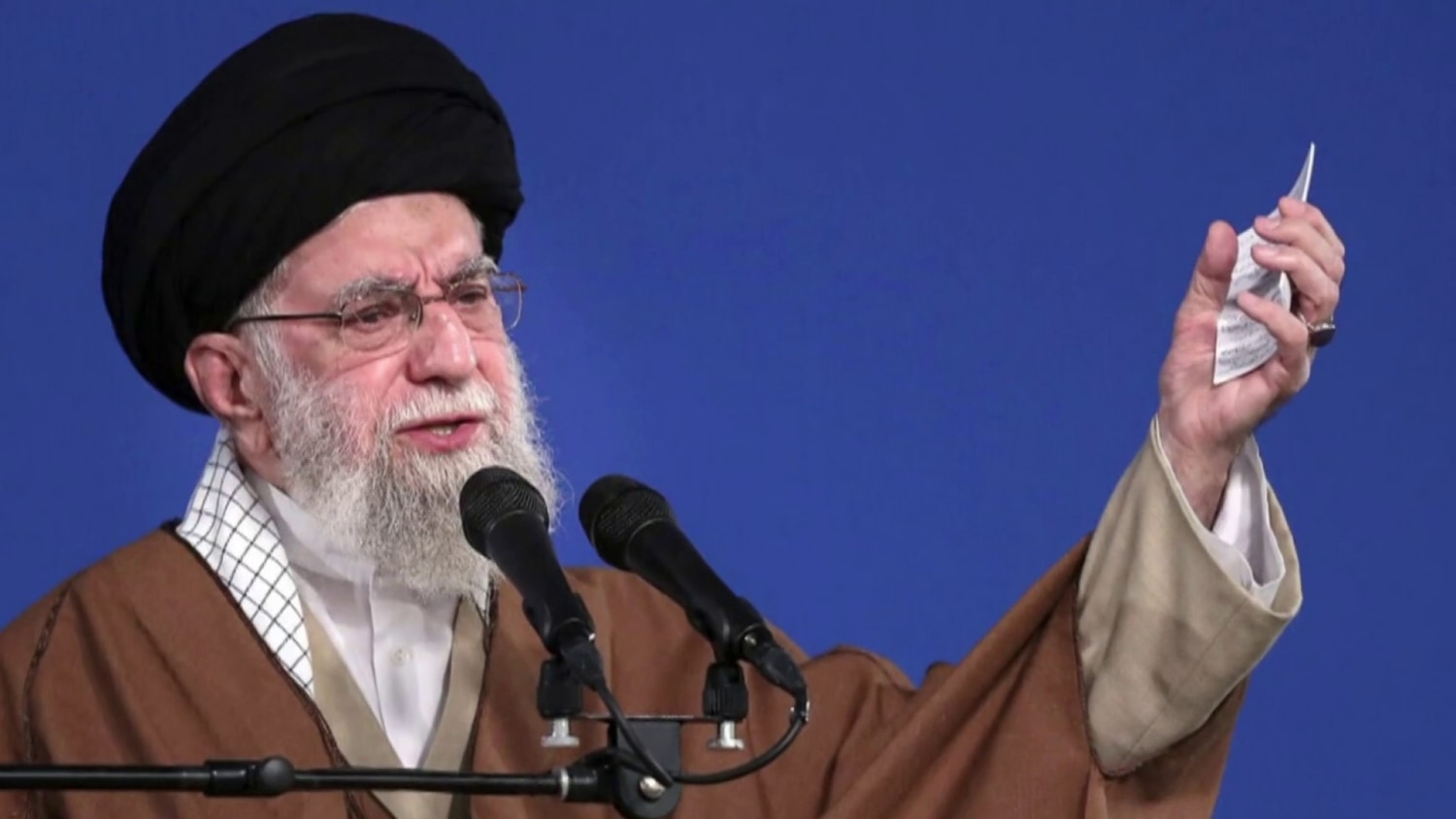
Khamenei was an architect of the coalition of militant groups informally called the “Axis of Resistance” — including Hezbollah in Lebanon, the Houthis in Yemen and Hamas in Gaza, as well as smaller groups in Iraq — that are aligned against the U.S., Israel and Saudi Arabia to protect Iran’s influence in the region. Under Khamenei’s leadership, Iran cultivated an alliance with Russia and good relations with China to counter U.S. influence.
Prior to becoming supreme leader, Khamenei served two terms as president under Ayatollah Ruhollah Khomeini, the founder of the Islamic Republic who took power in the 1979 revolution. When Khomeini died in 1989, Khamenei — a Shiite cleric, but not necessarily among the highest-ranking of them — outmaneuvered a field of other would-be successors, according to Ali Kadivar, an associate professor of sociology and international studies at Boston College, who wrote a treatise on Khamenei’s origins for the Project on Middle East Political Science.
Khamenei held on to power for decades — through periodic internal uprisings and the presidencies of hard-liners and moderates, and in the face of international sanctions that strained daily life for Iranians — by claiming Khomeini’s mantle as a fierce defender of Iran’s oppressive regime. He preached a hard line against protests that erupted after the 2022 death of 22-year-old Mahsa Amini in custody after her arrest by Iran’s notorious morality police — an arrest reportedly for not properly covering her hair under Iran’s strict Islamic dress codes.
Earlier this year, Khamenei accused anti-government protesters of acting on behalf of President Donald Trump in the mass demonstrations that began in Tehran in late December, deriding the participants as “vandals.” He also accused Trump of “appalling slander against the Iranian people” and blamed him for casualties and damages resulting from the protests.
In fact, it was Khamenei who ordered the government to use deadly force to quell the protests. The U.S.-based Human Rights Activists News Agency, which cross-checks collected data with people on the ground, estimates that more than 7,000 people died during the demonstrations from December through this month. Almost all were protesters, the group says, but the total includes children and other bystanders as well as police and government forces.
Trump previously called for new leadership in Iran, calling Khamenei “a sick man” who was “guilty of … the complete destruction of the country and the use of violence at levels never seen before.”
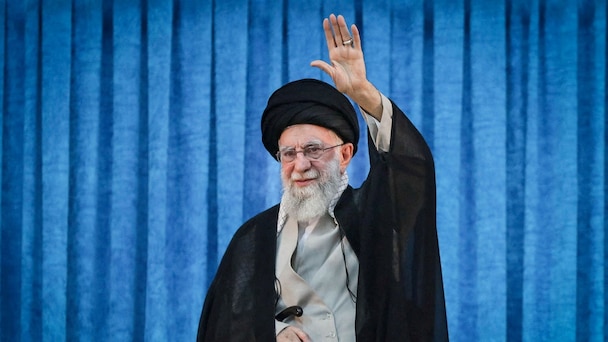
Trump has encouraged Iranian citizens to rise up again but has not said who or what form of government he thinks should take Khamenei’s place.
It’s not clear whether anyone was immediately in line to succeed Khamenei. He was reportedly grooming former Iranian President Ebrahim Raisi as his successor, but Raisi died in a helicopter crash in 2024.
As reports of Khamenei’s death spread within Iran, according to residents in Tehran and Karaj, some people took to the streets, honking horns, whistling, clapping and chanting, “Death to Khamenei!”
Leda Joy Abkenari and Julia Jester contributed to this report.
Related Articles




Featured Posts

“She Looks Very Sickly!” A Newly Released Photo Shows Kate Middleton Looking Unrecognizable / Now I’ve Seen Everything












:max_bytes(150000):strip_icc():focal(749x0:751x2):format(webp)/tout-Underweight-Dog-050426-c32e0d4b6e5447f1a7f1141e4080398c.jpg?resize=750,500&ssl=1 "Underweight Stray Dog, with ‘Dangerously Low’ Body Temperature, Rescued and Given New Name While Being Nursed to Health")



:max_bytes(150000):strip_icc():focal(745x234:747x236):format(webp)/Bristal-Brewster-1-050726-7115d79c6c614189aefa39b2e1a4b783.jpg?resize=750,500&ssl=1 "Parents Notice Their Toddler’s Sudden Limp. An MRI Scan Revealed the Devastating Reason (Exclusive)")

:max_bytes(150000):strip_icc():focal(749x0:751x2)/jennifer-aniston-111225-c037a077dd3043178ee27f4038312cd6.jpg?resize=1500,1000&ssl=1 "Jennifer Aniston Overcomes the Pain of Infertility")



:max_bytes(150000):strip_icc():focal(764x9:766x11)/Will-Smith-Says-Hes-Lost-Sleep-Over-Potentially-Penalizing-His-Emancipation-Crew-After-Oscars-Slap-112922-2b5ef96896d34b7e8c33f4a36aee6cf4.jpg?resize=1500,1000&ssl=1 "Will Smith Sued")
:max_bytes(150000):strip_icc():focal(728x329:730x331)/michael-douglas-wall-street-020226-2-f626de6e6c884382ae5e9697d94db977.jpg?resize=1500,1000&ssl=1 "Why Is Michael Douglas Halting His Career Following Tongue Cancer Treatment?")